Solar power works well on land, but it struggles underwater because sunlight is limited at certain depths. As a result, researchers have struggled to power deep-sea cameras or monitors with solar energy.
In recent studies, researchers developed solar cells that operate 32 feet (10 meters) deep in the ocean and could power communication systems or sensors far from shore.
Taking Solar Power Deeper
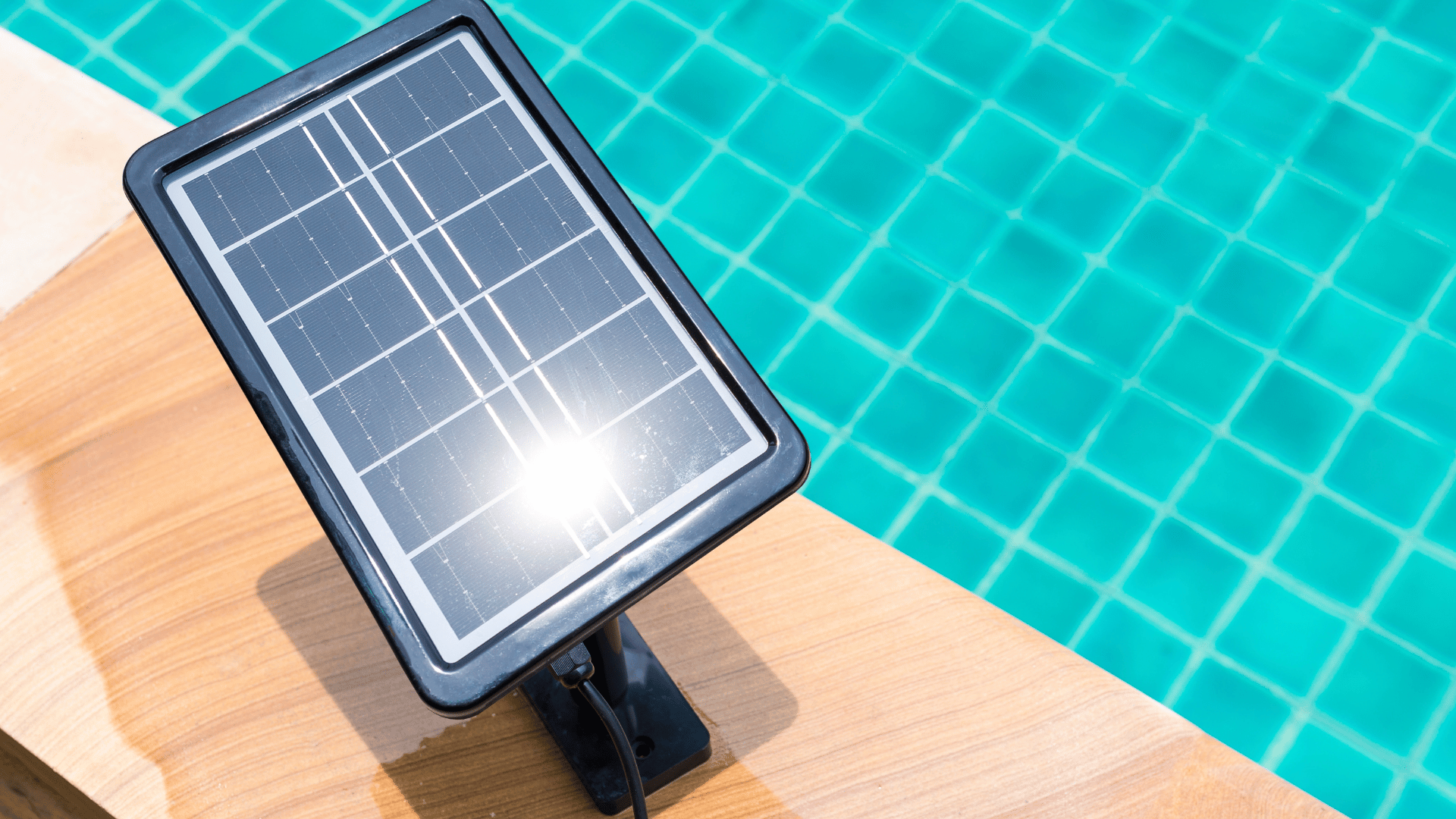
A new study showed these cells can run continuously at a 32-feet depth for about 5.5 years.
“Very few studies have been reported on underwater solar cells, and all of them are focused on very shallow water depths of only two meters or less, a scenario far from catering for requirements of practical application,” Author Wen-Hua Zhang from Yunnan University and Southwest United Graduate School explained.
To fix this, the team built a custom system to mimic underwater light at different depths using wide bandgap cells, which easily absorb blue to orange light. After 1,160 hours in a simulated 32 feet depth, they showed almost no wear and tear and even kept 96% of their efficiency after sitting in a nitrogen gas box for 300 days.
Advertisement
“This work presents the first functional validation of submerged solar cells practically operating at a water depth of up to about 10 meters (32 feet), greatly broadening their application scope,” Zhang added.
Ocean Tests
The team attached their perovskite solar cells to underwater robots off the Weizhou Islands to see what would happen. In only two hours, the cells made 324 mWh of energy, enough to charge lithium-ion batteries.
“What surprised us most was so much electrical energy our large-area modules generated under real-world conditions at 10-meter (32 feet) water depth for only two hours,” said Zhang.
“Moreover, we have achieved scaling from small‑area laboratory cells to large‑size modules,” Zhang explained. “The combination of the laboratory investigations and the in-field experiments provides strong evidence for the operation of underwater photovoltaics.”
In the future, the research team wants to test the cells even deeper to find their exact limits and create standard testing rules for underwater solar power.
 Read Exclusive Stories
 Bookmark & Save Articles For Later