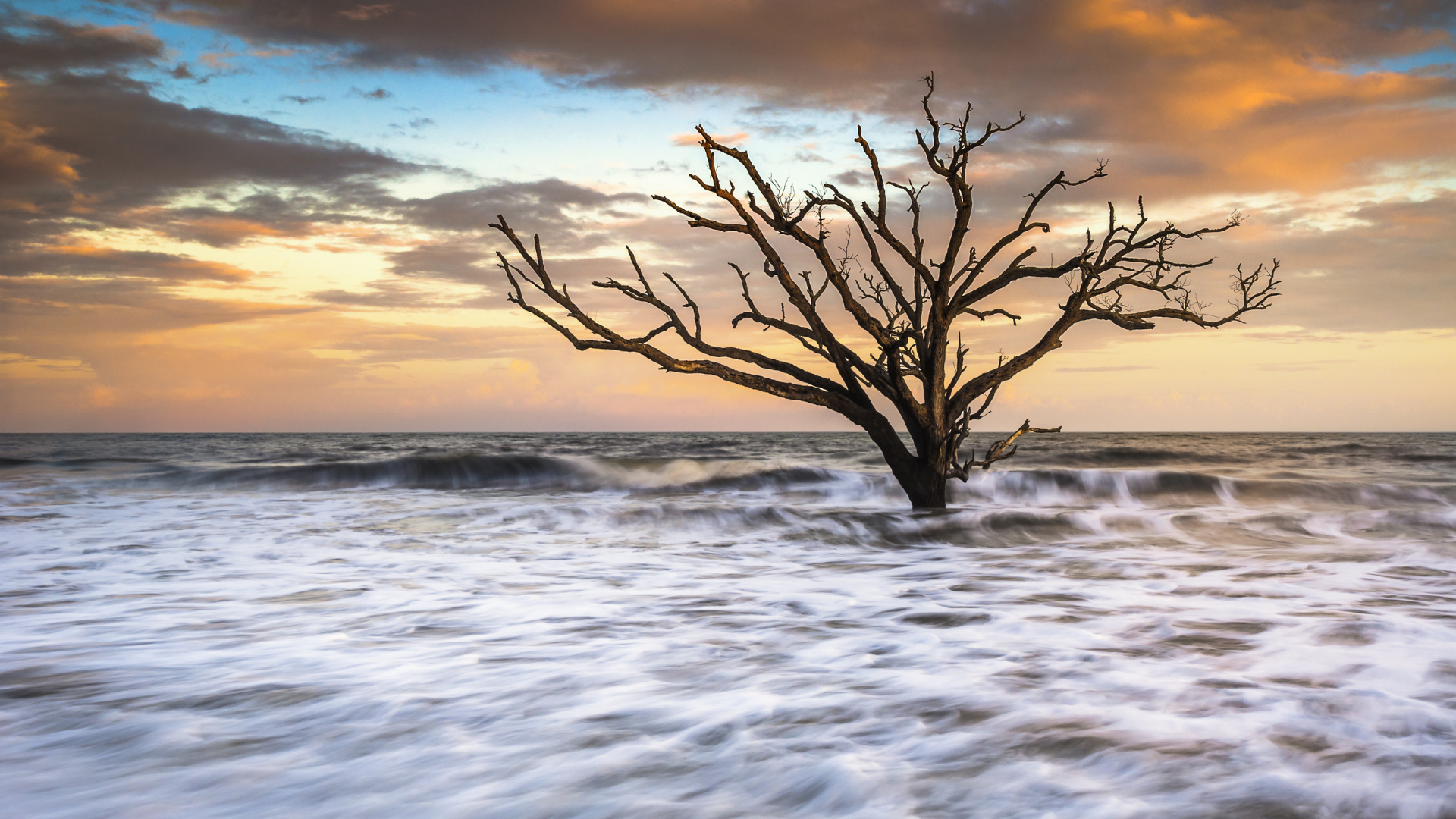
When traveling to Edisto Island in South Carolina, you’ll see a beach that looks like a graveyard of trees. This beach is called Boneyard Beach, and it is located in the Botany Bay Plantation Heritage Preserve.
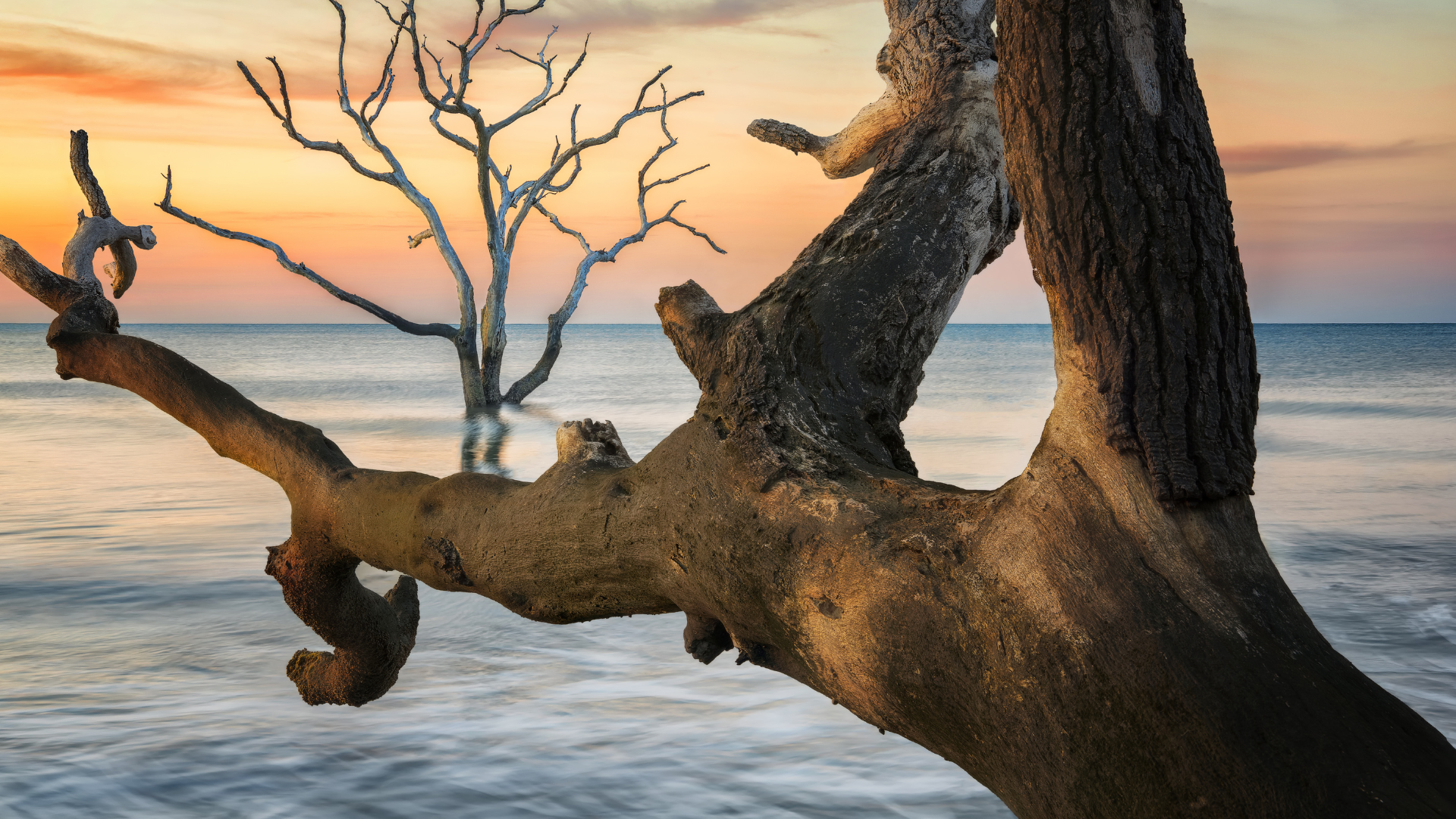
Unlike other beaches, there are no colorful umbrellas or lounge chairs lining this beach. Instead, there are many fallen trees. These trees lie in the sand and extend into the surf. Over time, the sun and salt water have sun-bleached the trees completely white, and they appear like giant skeletons.
How The Trees Ended Up In The Ocean
This problem stems from accelerated coastal erosion. While migration on barrier islands occurs naturally, the coastline at Botany Bay is experiencing accelerated erosion.
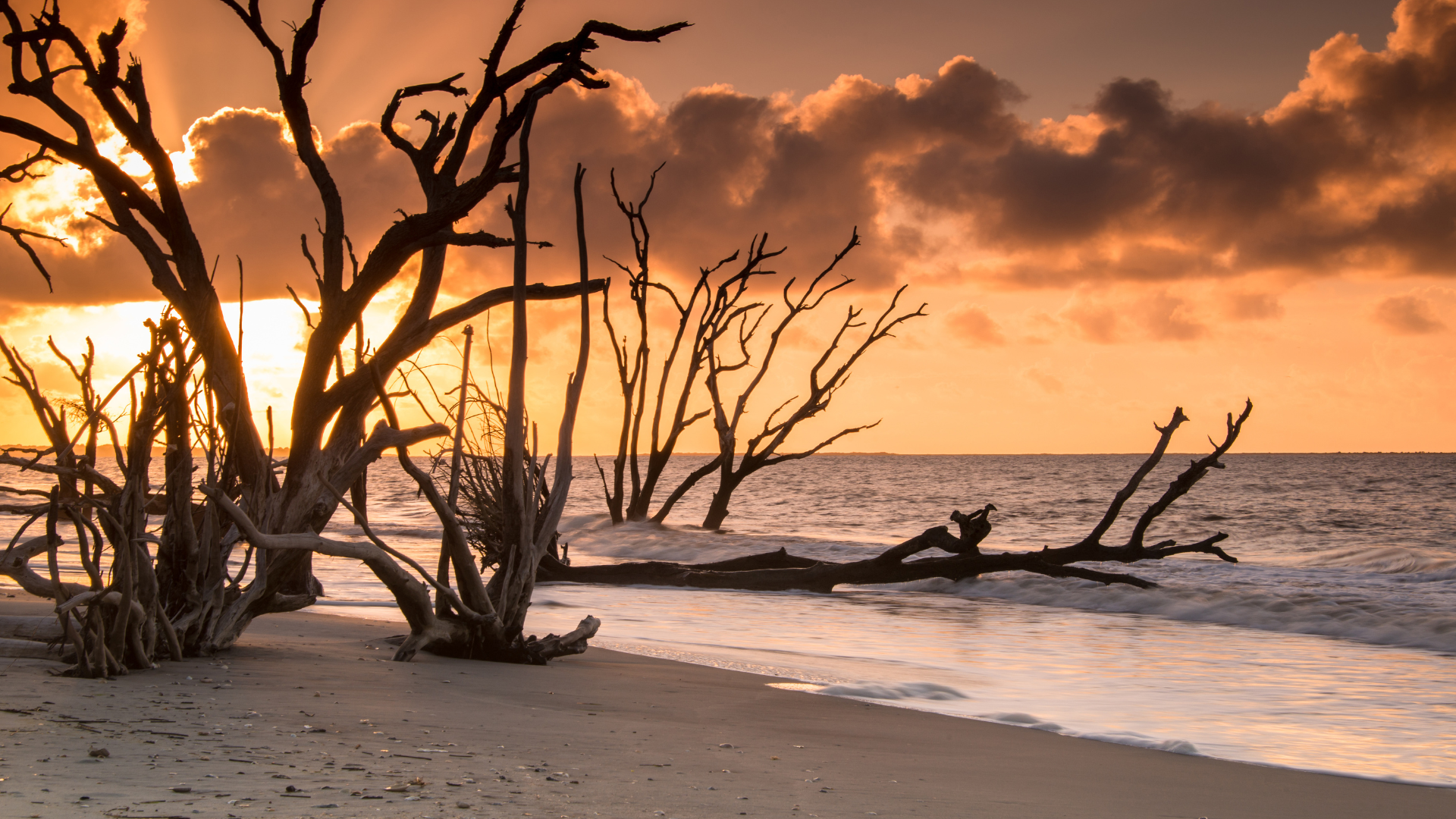
These dead trees are remnants of a once-healthy maritime forest from many decades ago. At that time, the forest was on dry land. However, powerful storms in the Atlantic, along with tides and wave action, have gradually undermined these trees by removing the sand beneath them. Ultimately, the sand failed, and the trees fell into the ocean.
Since the trees are made of live oak and palmetto, they will not float down the coast or readily decay. Instead, the roots remain embedded in the sand, and the waves continue to crash against the trees daily.
Advertisement
A Completely Protected Shoreline
This beach has one big problem: nothing may be taken from it. This area has been converted into a wildlife refuge to remain wild.
There are thousands of fossilized shark teeth, sea stars, and shells scattered across the shoreline. However, removing even one shell is prohibited. Because nothing is taken from the shore, nature has left all of its debris on the beach.
There is also a time factor. At high tide, the ocean will have almost completely consumed the beach and will advance into the forest. At low tide, though, one can see the remains of the trees in the sand. This is an example of the ocean continually trying to reclaim land.
 Read Exclusive Stories
 Bookmark & Save Articles For Later