When a drone is monitoring an area, let’s say a remote forest of sorts, it eventually needs to return home and charge. A new concept explores the possibility of a drone latching onto a tree to rest and shutting down its motors. However, this is extremely difficult for typical drones, often impossible.
When a drone has a grabber, it blocks its own camera view as it attempts to land on a branch.
Researchers at TU Delft built a drone to fix that issue. The new drone feels for a branch rather than relying solely on sight.
Feeling for the Branch
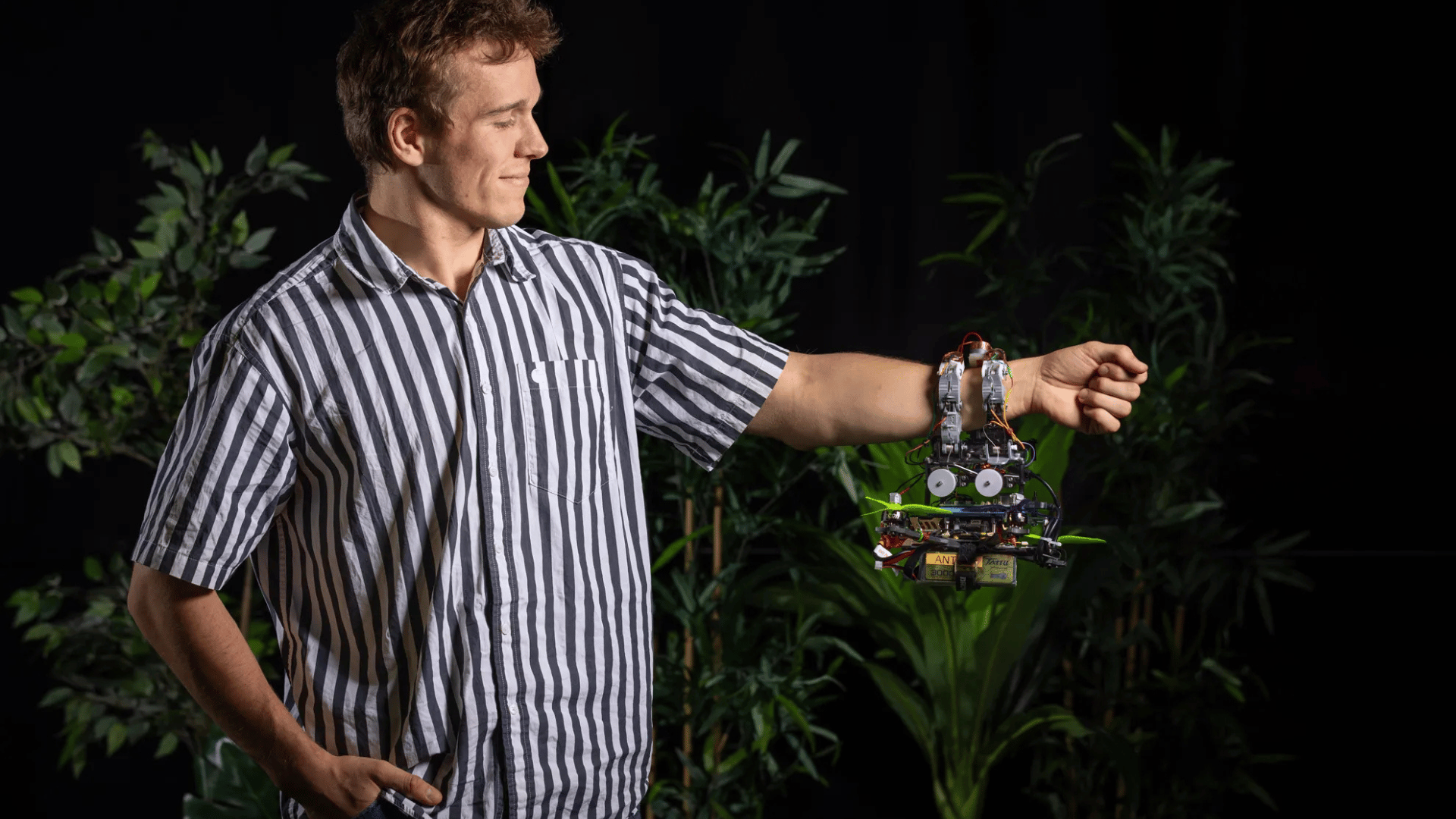
Drones typically require a perfect view to safely land itself. This new one, however, only needs a rough estimate.
It flies in a figure-eight pattern, opening and closing its three-fingered hand. When the fingers bump into something, the drone uses that first touch to figure out exactly where the branch is.
Advertisement
Then, the drone turns, lines itself up, and grabs on. Once all three fingers feel a solid grip, it switches off the motors. If it misses, it backs up to a safe hover and tries again. Associate Professor Dr. Salua Hamaza helped lead this project. She was inspired by how birds use their feet to feel a branch in the final seconds of landing.
The Drone’s Hand is Built for Flying
The drone has a lightweight hand with three fingers, and each finger has three sections. A single tendon opens the fingers, and springs pull them closed. Once it grabs a branch, it doesn’t need any battery power to hold on. Soft silicone pads help it grip different surfaces.
Under that silicone, there are nine small copper touch sensors. They send a simple yes-or-no signal when they hit an object. Because it knows the exact position of its fingers, it uses those simple bumps to figure out where to move next.
In flight tests, the touch-based drone landed safely even when its initial guess about the branch was wrong. A standard camera-based drone quickly failed the same test.
Drones bumping into things used to be a crash risk. Now, using touch can help them navigate thick forest canopies and cluttered industrial spots where cameras alone just aren’t enough.
 Read Exclusive Stories
 Bookmark & Save Articles For Later