If you look closely at a quality pair of leather gloves, you might think you are looking at just two simple cutouts stitched around your hand. Look between the fingers, though, and you will discover a surprisingly complex puzzle. A single handmade leather glove often requires 16 to 20 separate pieces of leather.
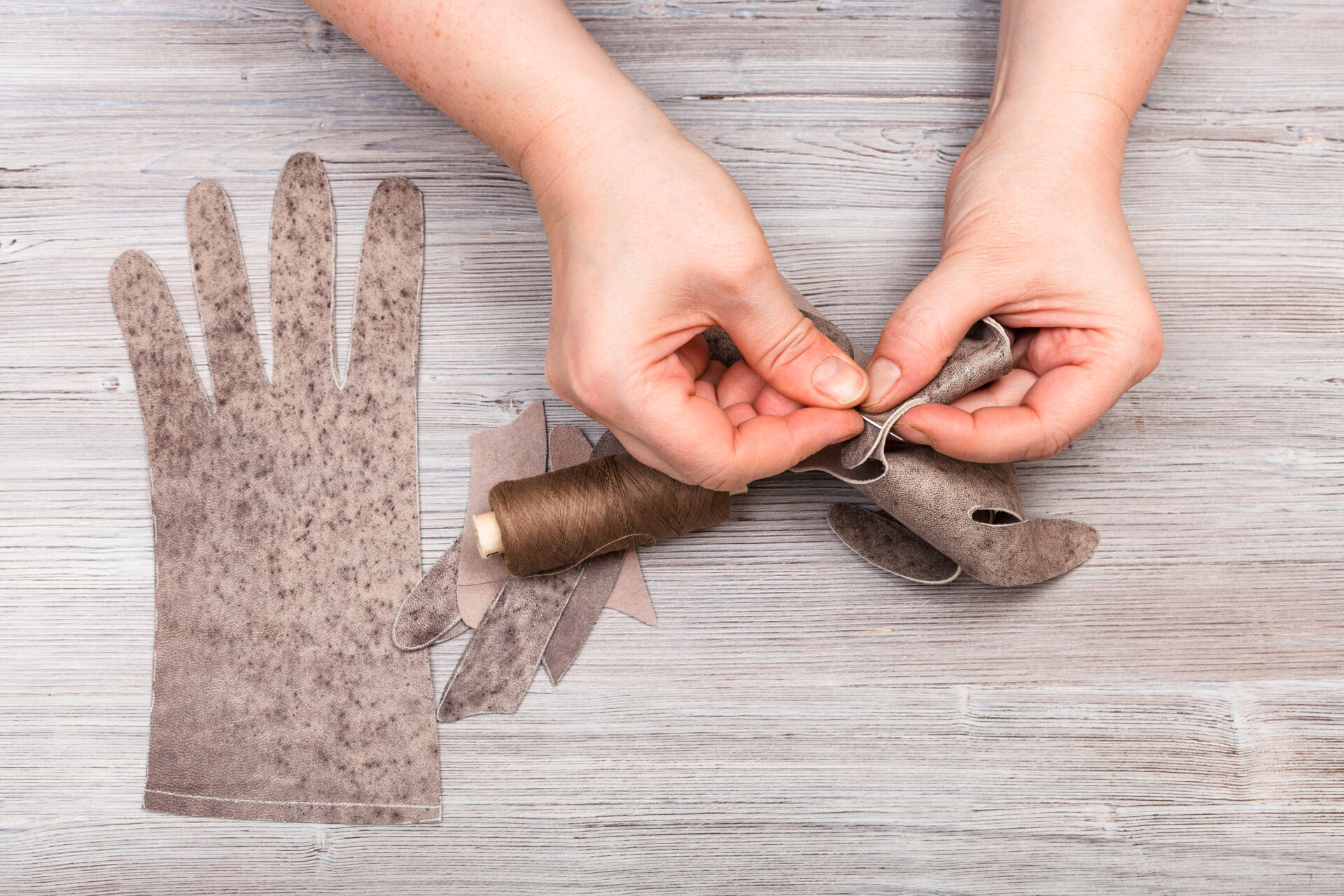
Making a glove fit like a second skin requires clever geometry and centuries of tailoring tradition.
The Main Body: The Trank
The foundation of every glove starts with a piece called the trank. The glovemaker cuts a single rectangular piece of leather, folds it in half, and stamps out the front and back of the hand along with the main finger shapes.
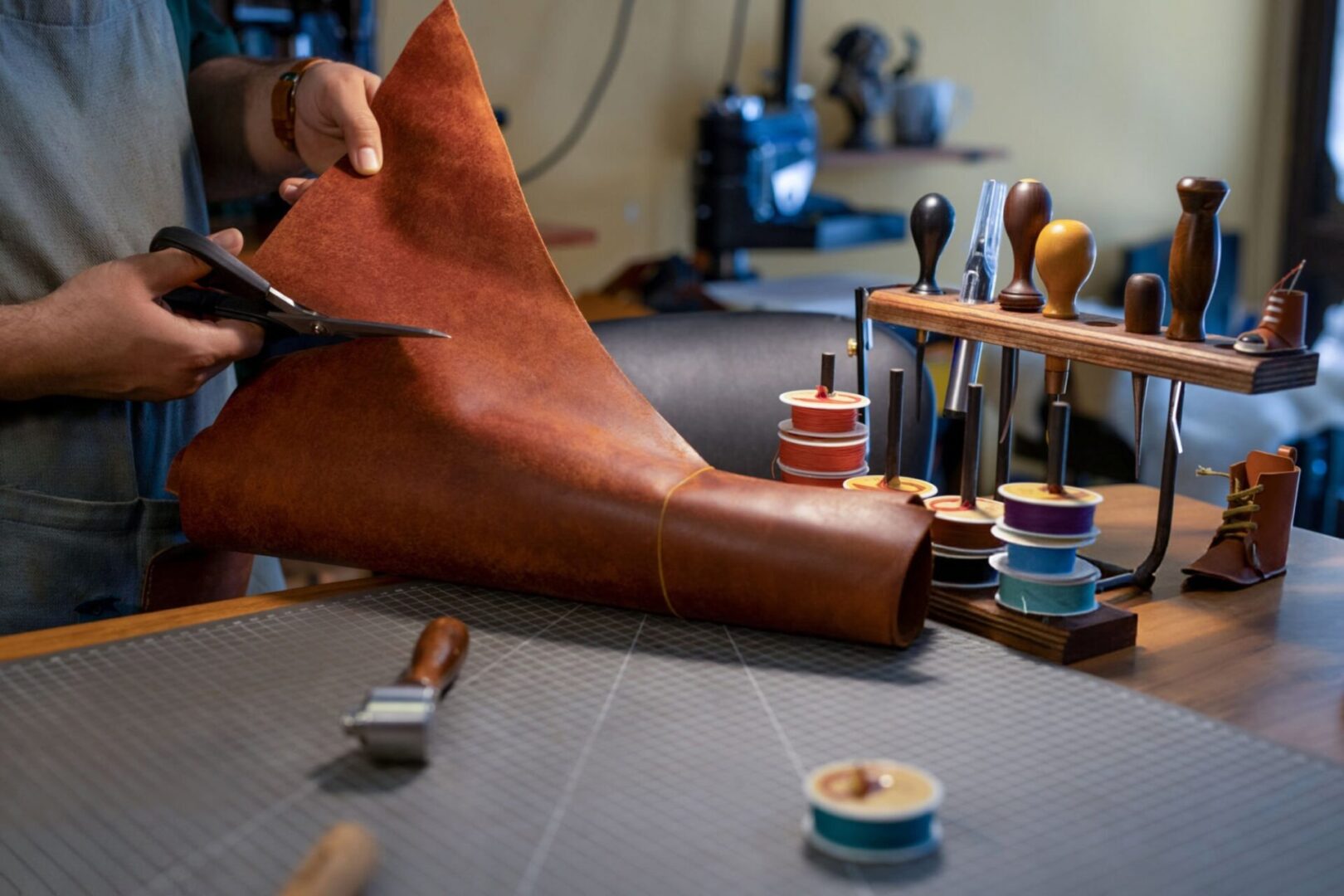
Leather does not stretch equally in every direction. Master glovemakers stretch the wet leather by hand along its width before cutting. This ensures the finished glove flexes across your knuckles when you make a fist, but never sags or gets longer at the fingertips.
The Hidden Workhorses: Fourchettes
If you only sewed the front of the trank to the back, your glove would end up flat like a mitten. Human fingers are 3D cylinders, not flat ribbons.
To create depth, glovemakers sew long, thin strips of leather called fourchettes (derived from the French word for “fork”) down the sides of every finger. A standard glove uses twelve fourchettes in total, six for each hand. These side panels run up one side of a finger and down the other, giving your fingers room to bend without pulling the leather tight across your knuckles.
Advertisement
The Tiny Details: Quirks and Thumbs
Even with fourchettes, the V-shaped crotches between your fingers take a beating every time you spread your hand.
Traditional glovemakers solve this problem by inserting tiny, diamond-shaped leather patches called quirks right at the base of the finger joints. These small pieces act as relief valves. They prevent the seams from tearing under tension and give your hand a full, natural range of motion.
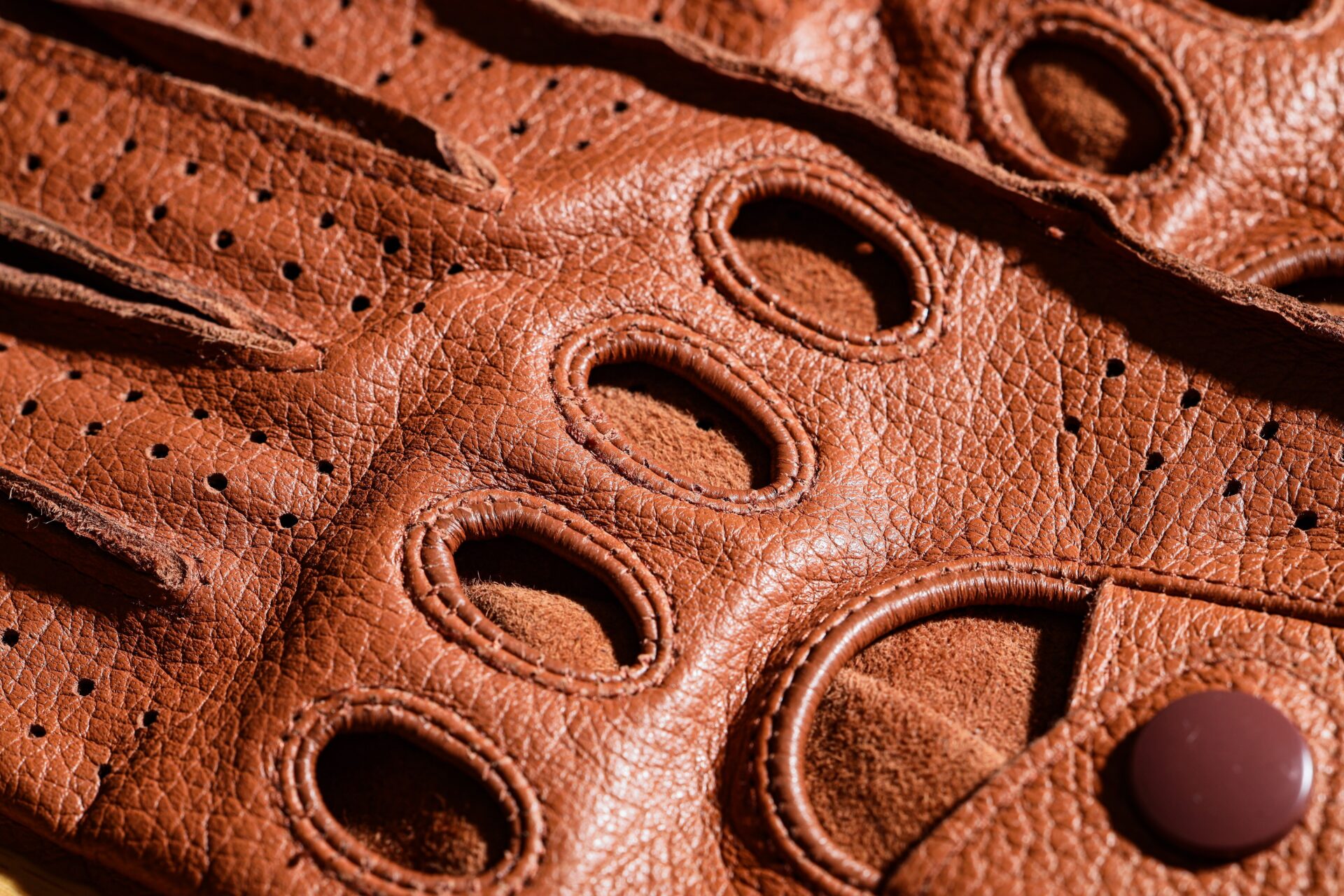
The thumb requires its own special engineering. Because the human thumb moves in multiple directions, glove makers cut it as a separate piece and set it into a specially shaped hole in the palm.
Modern Tech Meets Ancient Craft
Craftsmen like Dents in the UK, who have made handmade gloves since 1777, still use these exact 16-piece patterns today.
Modern high-performance gear takes this multi-piece concept even further. Designers for orthopedic work gloves, motorcycle gear, and robotic haptic feedback suits use advanced 3D scanning software to map hand stress points. They add dozens of laser-cut leather and composite panels right where your hand flexes most.
The next time you pull on a fine leather glove, remember the intricate engineering hiding between your fingers. It takes a small army of tiny, precisely cut pieces to make leather feel like your own skin.
 Read Exclusive Stories
 Bookmark & Save Articles For Later