Imagine spending hundreds of hours bending thousands of tiny metal rings, one by one, just to make a single shirt. That is the reality of chainmail. Long before modern body armor existed, ancient blacksmiths figured out that interlocking tiny loops of iron created a flexible, slash-proof defense.

It sounds simple, but the process takes immense patience and clever engineering.
From Wire to Armor
Making chainmail starts with plain metal wire. Artisans wrap this wire tightly around a wooden or metal rod, creating a coil that resembles a giant spring. Next, they slide the coil off the rod and cut straight down one side with heavy shears or a saw.
This leaves you with thousands of open, C-shaped rings.
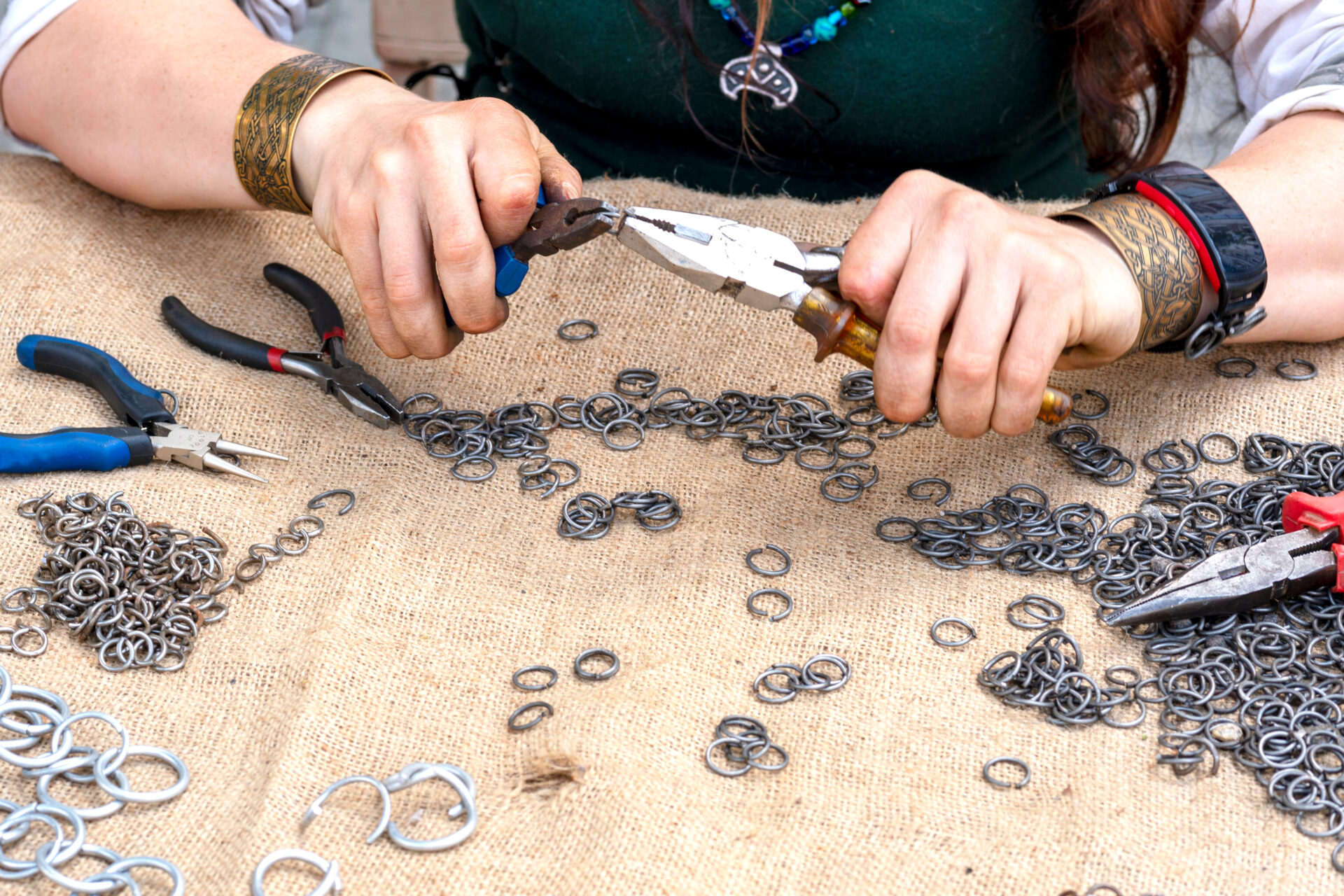
From there, the weaving begins. The most common historical pattern is called the European 4-in-1 weave. To make it, you take one open ring, thread it through four closed rings, and seal it shut. Repeat that process thousands of times, and a solid sheet of metal mesh begins to take shape. A full suit of armor often requires anywhere from 20,000 to over 50,000 individual rings.
The Problem With Plain Rings
Advertisement
If you just bend the rings shut, a strong sword blow or spear point can pop them open. Medieval armorers solved this by making riveted mail.
To make riveted chainmail, blacksmiths overlap the two ends of each ring, flatten the joint with a hammer, and punch a tiny hole through both ends. Then they insert a microscopic pin or rivet and hammer it flat. This locks every single ring shut.
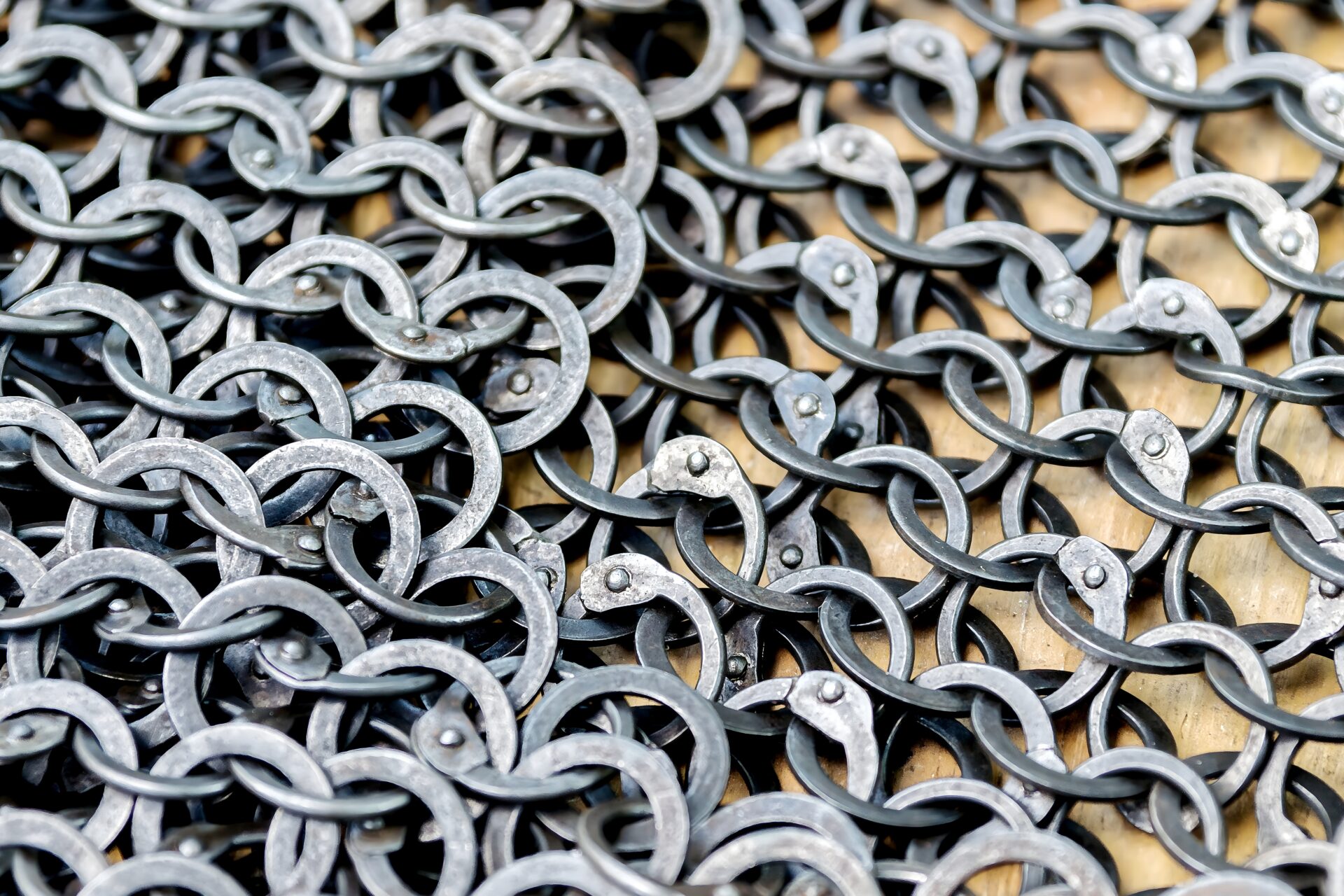
Testing by armor historians, including research published by the Royal Armories Museum, shows that riveted mail can stop sharp blades and distribute the blunt force of a hit across a large area of the body.
Why Chainmail Still Matters Today
Chainmail might seem like a leftover artifact from medieval knights, but the production concept is still alive and well today. Modern manufacturers use mechanized versions of this medieval technique to protect people in high-risk jobs:
- Butchers and meat processors wear stainless-steel mail gloves to prevent accidental slips with knives.
- Scuba divers who encounter sharks wear full chainmail suits to protect against shark bites.
- Industrial workers use specialized mail mesh when handling high-pressure cutting tools.
- NASA engineers have even experimented with chainmail-inspired metallic fabrics to build flexible, high-durability tires for space rovers exploring rough planetary terrain.
The Ultimate Test of Patience
Hobbyists and historical re-enactors still craft chainmail by hand using the exact same methods as ancient armorsmiths. While modern machines can now weave wire mesh in seconds, hand-weaving chainmail remains a fascinating look at how early human innovation turned basic wire into life-saving gear. It proves that simple materials, combined with clever design and a lot of time, can stand the test of centuries.
 Read Exclusive Stories
 Bookmark & Save Articles For Later