Brain-computer interfaces tend to spend most of its development and use in labs, tested in study after study. The technology’s lifecycle usually starts and ends in a lab. A new study, however, shows that the technology could make its way to real-life patients.
Researchers at UC Davis, Brown University, and Mass General Brigham developed a brain-computer interface (BCI) system that enables a person with severe paralysis to communicate and use a computer on their own.
Taking Back Control
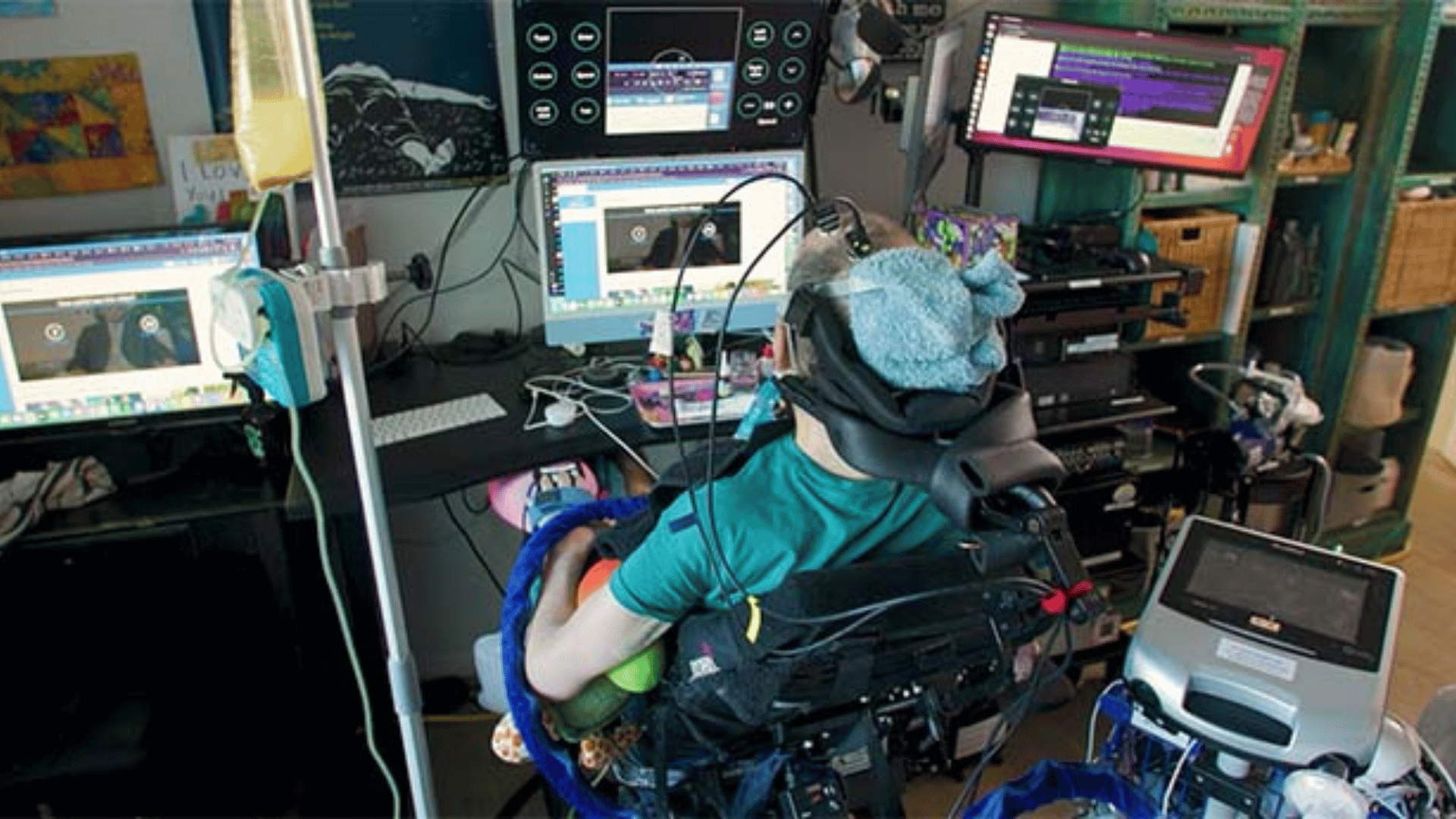
Historically, similar devices only worked if a researcher was in the room to operate them. According to this team of researchers, the new system addresses that issue. The brain-computer interface device was tested by Casey Harrell, a 47-year-old man with ALS, a disease that has caused severe weakness in his limbs. It all started in 2023 when the team implanted the device into the pat of Harrell’s brain that controls speech.
Over the last few years, Harrell used the system for over 3,800 hours. Using the device, he communicates about 56 words per minute with over 99% accuracy in tests. Unlike previous BCI devices, he uses it on his own.
Advertisement
“For years, BCIs have been proof-of-concept devices that lived in highly controlled research labs,” said Dr. David Brandman, the UC Davis neurosurgeon who co-led the study. “This work shows that we may have crossed a threshold, by empowering a person with paralysis to speak on his own terms.”
Using the Brain-Computer Interface to Connect
The implant allows Harrell to work, send emails, and communicate with his family. “It is a life that is more full of dynamic action and with friends and family, with colleagues, and it is something that allows me to communicate more in my natural way of communicating than any other technology that I have experienced,” Harrell shared through the system.
Ultimately, the researchers wanted the device to help people take back their independence despite any medical hurdles, such as ALS. They emphasized that the device is more than just typing and communicating on a screen, it gives a patient back a part of their life that was missing.
“It is very sweet to have the ability to look at my wife’s eyes when she hears my voice and conjures up a sweet memory and to explain to my daughter who does not really remember anything about when I was still talking to them and remind them of what I used to sound like,” Harrell shared.
In addition to being a “test subject” for the device, Harrell’s experience will help patients down the line. The thousands of hours of data from Harrell’s daily use will help researchers figure out how the brain produces speech, which could lead to better therapies down the road.
 Read Exclusive Stories
 Bookmark & Save Articles For Later