For over a century, science has created everything from diamonds to lab-grown meat to 3D-printed rocket components. Yet, the $100+ billion wine and spirits industry continues to rely upon a technology from the Iron Age: wooden barrels.
Why haven’t the silicon-based tech innovators of today replaced the wooden barrels used throughout the spirits and wine industry? Because one of nature’s most perfect creations remains beyond the reach of even the mightiest engineers of today.
The craft of cooperage is the process of creating vessels, such as barrels, from wooden staves. These artisans are called coopers. The skill requires a knowledge of the science behind the process.
When creating barrels for processes such as wine aging, the preferred wood is White Oak. This hardwood species contains structures within its cells called tyloses. These tyloses naturally form within the heartwood of the tree as the sapwood matures into dead wood. These structures essentially plug the vascular channels within the wood’s cellular structure.
In other types of wood, such as Red Oak, the channels within the cells allow liquids to move in and out of the wood. But the tyloses in White Oak act as natural corks, preventing liquids from penetrating the barrel over time. It is also permeable to oxygen.
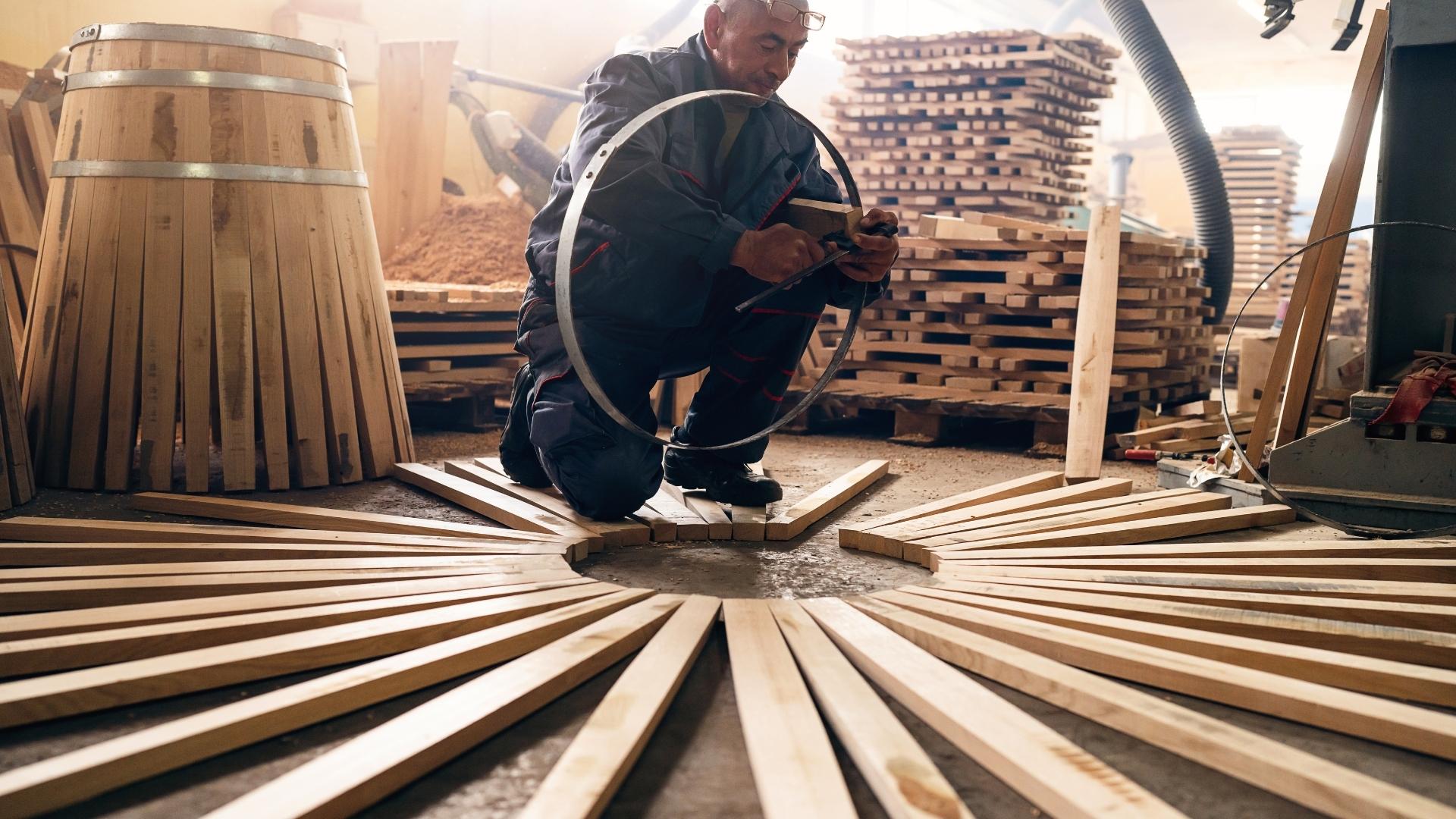
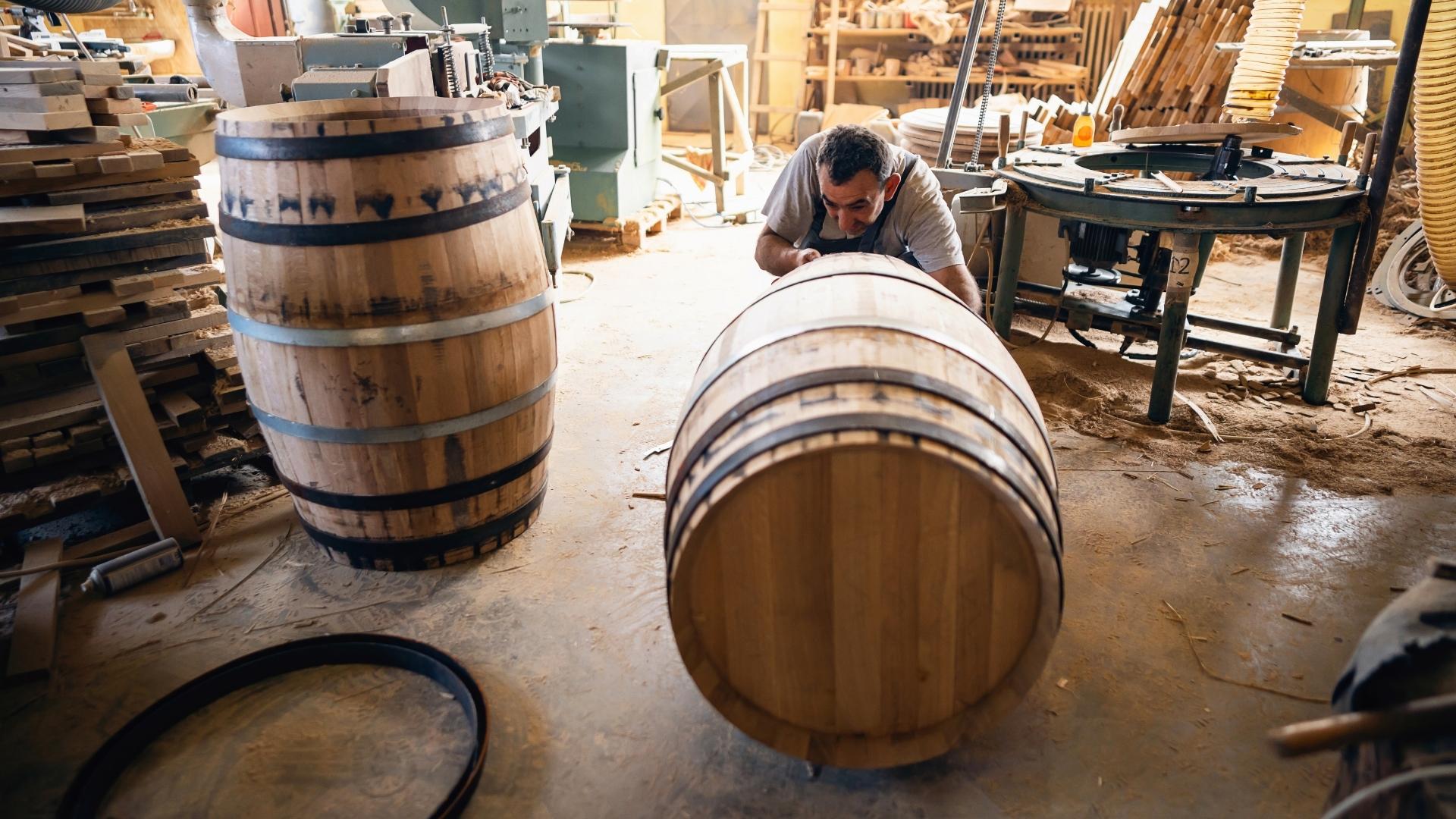
A stave is a strip of wood that is used to create a barrel. The strips of wood are wider in the middle and feature tapered ends. Metal hoops are placed into the barrel and forced into these ends, creating immense pressure on the staves. This creates a bulge in the center of the barrel, or the bilge. This creates an even distribution of the liquid’s pressure within the barrel and allows a 500-pound barrel of liquid to be rolled by a single person.
Advertisement
Another essential step in creating a barrel is setting it on fire. Pyrolysis occurs when wooden staves are toasted over an open oak fire to alter the wood’s chemical structure. As a result of this process:
- The hemicellulose in wood breaks down, releasing sugars that contribute flavor and color to aged wines and spirits like bourbon.
- The lignin in the staves breaks down, releasing vanillin, the compound responsible for the aroma and flavor of vanilla beans.
While chemists may be able to recreate the flavors produced by toasting wooden staves, it is still not the same as aging the wine in the barrel over time in the wine cellar. This allows for the wooden barrel to breathe and permit a slow exchange of oxygen with the wine.
This craft, like any craft, relies on the resources needed to continue producing the products associated with it. The growth of a White Oak tree to maturity takes between 60 and 100 years. Many of the finest cooperages are looking to the future and funding research studies at nearby universities regarding sustainable forestry practices for White Oak trees. Even further into the future, these cooperages are using AI to scan forests for valuable trees, mapping them with LiDAR technology to protect them from deforestation. They are nurturing not just the forests of today, but those that will be essential for the survival of the coopers of the 22nd century.
 Read Exclusive Stories
 Bookmark & Save Articles For Later