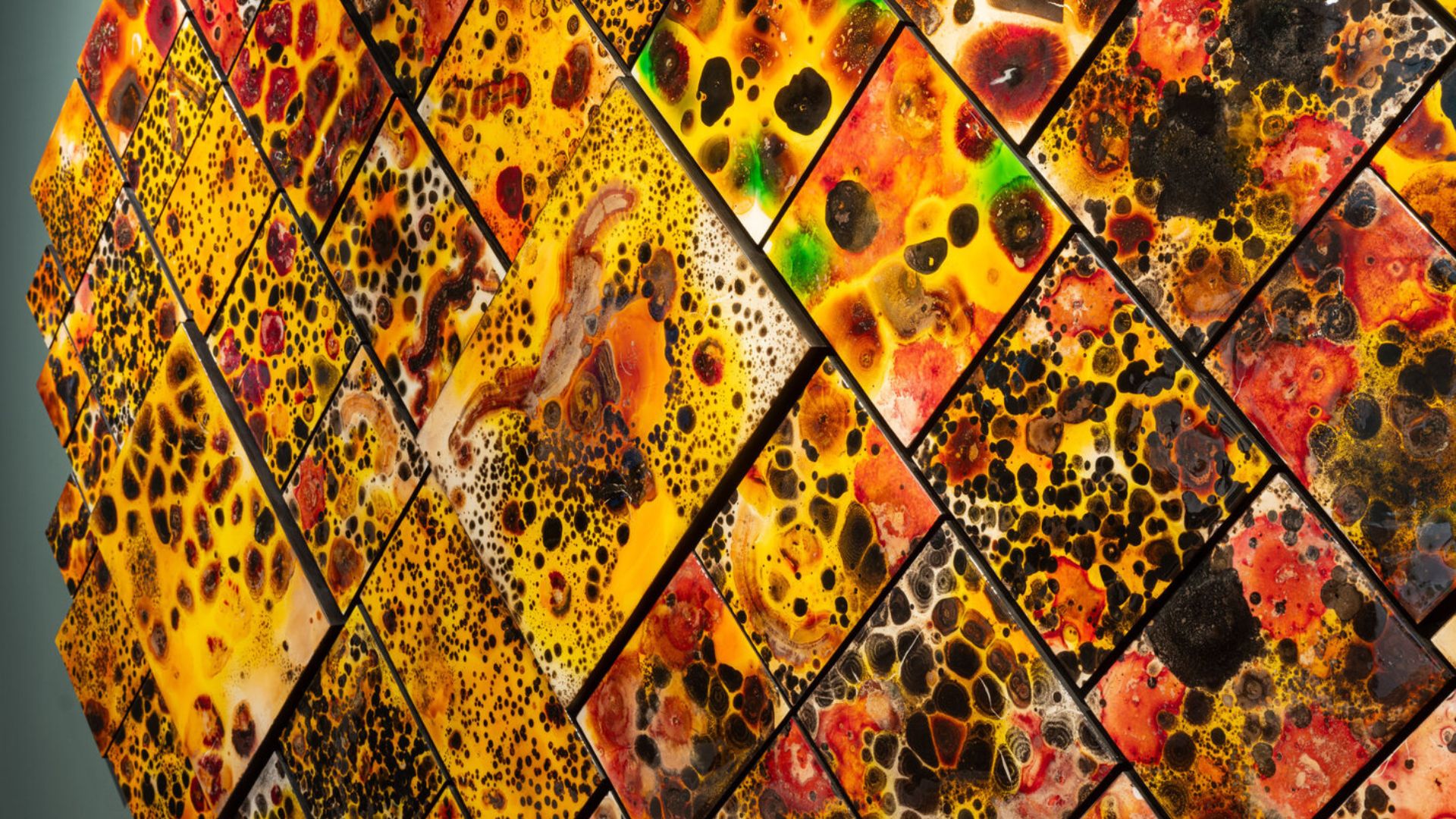
Selin Balci combines art and science. She paints with micro-organisms, uses petri dishes as palettes, and has a studio-lab. Trained in forestry and plant pathology, Balci sees colors and shapes in microbial colonies that most do not. She engineers shades of green, red, and yellow; grows these with different agars, and isolates strains for a seasonal palette. It takes discipline. Sterilize, UV-prepare, then monitor for contamination. When a culture eventually stabilizes, she applies the artist’s hand, frames it, composes it, and decides which living margin to display.
Cultivating Color and Control
Authorship in Balci’s practice implies cultivating, curating, and collaborating with living organisms unconcerned with aesthetic values, only with survival values. She interprets the behavior of the micro-worlds as a commentary on the human condition, in which they compete for limited resources and space. Rather than resist, she learns to live with it. Contamination was a failure in Balci’s early practice when her airborne spore-filling handiwork overtook her cultures. She embraced the method over time. In Contamination, the late-comers take center stage, affirming that nature has no agenda but the artist’s. It makes for a more truthful representation of living systems and highlights how little control we have.
Advertisement
When Images Begin to Live
Balci shares her process with the audience in Echoes of Nature. Using Polaroid film and materials found around the shores of the Chesapeake Bay, Balci fashions a scene on the shores at the source of the film. As the scene decomposes, she documents it with a time-lapse video with a clock ticking in the background. The project signals environmental destruction that occurs slowly until, on one fateful day, intervention is no longer an option. By showing it to the audience, she makes it real to them.
Interactivity is what distinguishes 30 Faces. Participants give Balci a Polaroid of themselves and a biological sample – skin scraping, hair, or a kiss on a dish. Their microbiome grows over their portrait and turns their identity into color, texture, and chance. Some portraits dissolve into filaments while others bloom into pale blossoms. Reactions from the audience range from curiosity to discomfort as some voice concerns about privacy and who owns their DNA. The work acknowledges our dependence on these organisms and suggests multiple authorship among the sitter, the artist, and the environment.
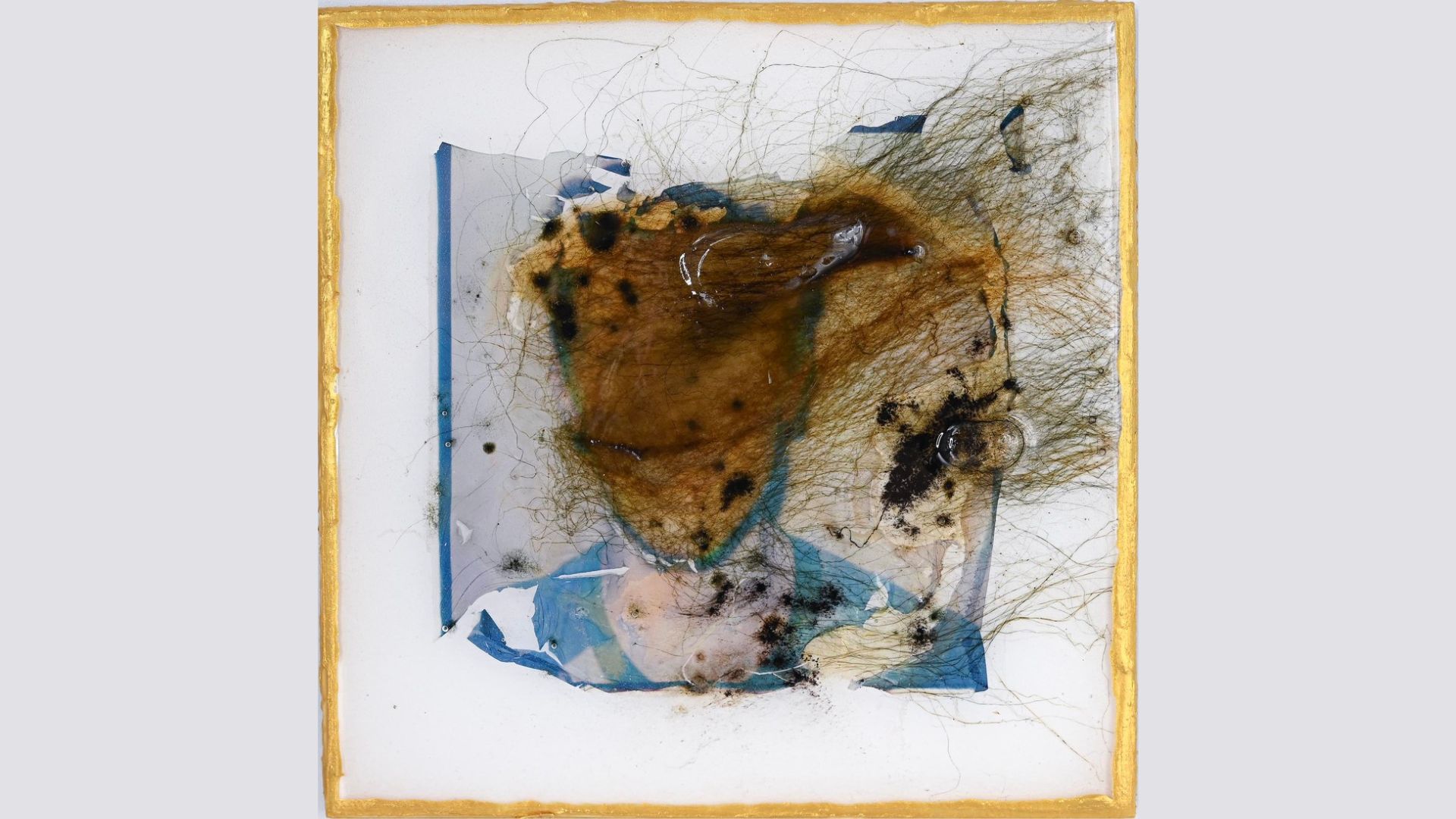
Living works need an eye to preserve them. Afterwards, Balci dries the substrate and seals it with a non-toxic epoxy resin. The resin captures the work’s color and shape but not its depth. She exhibits living work but is open to compromises, increasingly seeing it as an evolving practice. She experiments with different agars and Polaroid emulsions, clay, and surfaces. The outcome is open-ended and unexpected. Bioart is an opportunity to observe, not an object.
 Read Exclusive Stories
 Bookmark & Save Articles For Later