Most people think of lithium when it comes to battery storage. However, those materials are getting expensive and hard to find. Elestor is taking a different path by using iron and hydrogen, two of Earth’s most common elements.
The company recently put its hydrogen-iron flow battery to the test under real-world conditions. They wanted to see if the system could actually handle the grind of daily use over a long period. The battery showed stable performance at normal temperatures and voltages, and it didn’t show signs of breaking down. Based on these tests, the team expects these batteries to last 20 to 25 years.
Why Iron Beats the Alternatives
Choosing iron and hydrogen was intentional because of how accessible they are. While many batteries rely on rare materials like cobalt or vanadium, iron is everywhere. This matters because of “geopolitical turbulence.” Relying on materials that only come from a few specific countries can be risky. By using iron, the storage becomes self-reliant and independent of a small group of suppliers.
Advertisement
The active materials cost about $3.22/kWh. When you look at the whole system, that could lead to a storage cost of just $0.02/kWh.
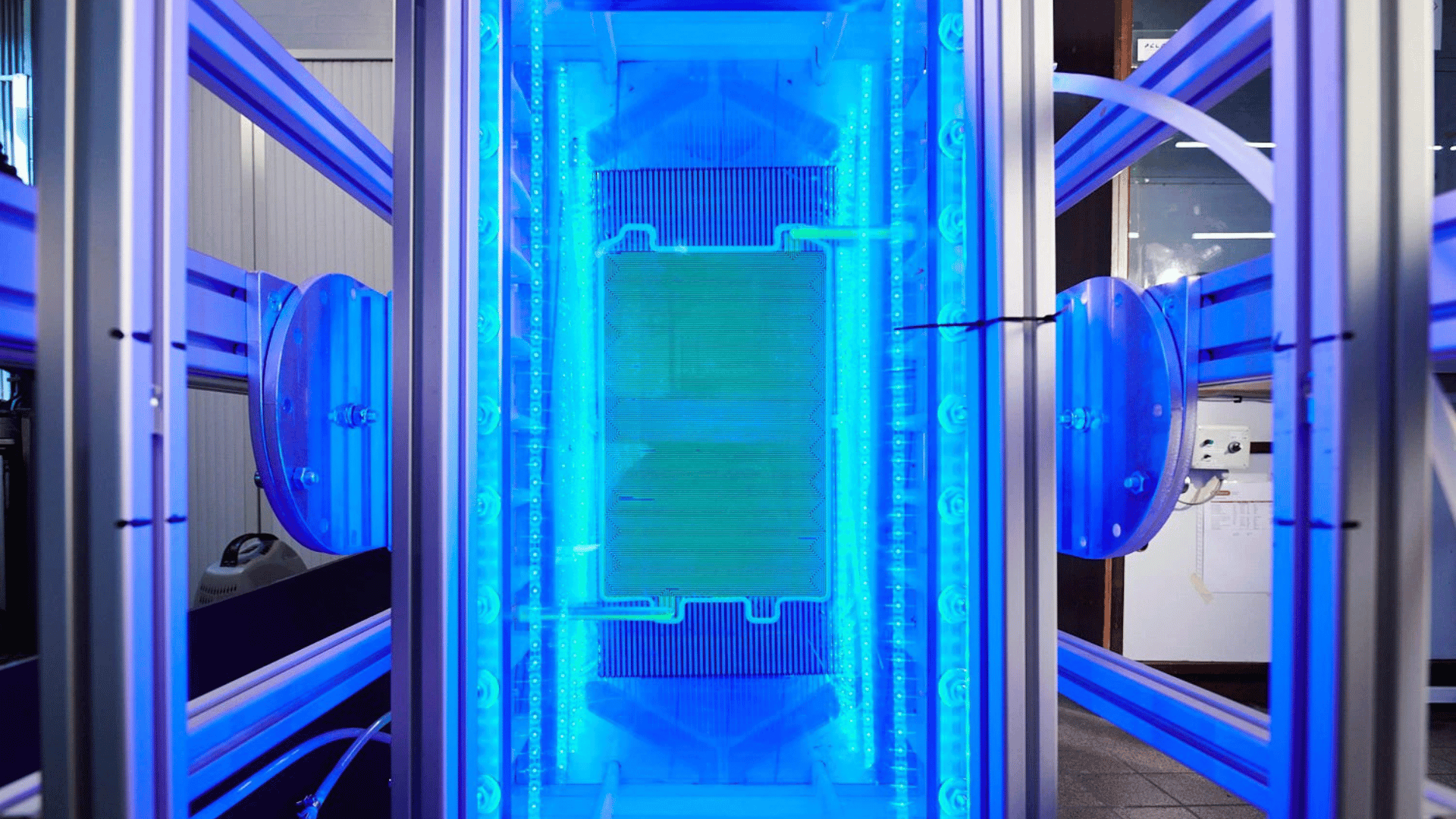
The tech works by using a “cell stack” where an iron-based liquid and hydrogen gas move in closed loops, separated by a thin membrane. While it might not have the raw density of a bromine-based battery, it’s much more practical for the real world.
Low-Cost Battery
The goal for the R&D team was to find the lowest possible cost per megawatt-hour. They looked at a lot of different chemistry combinations before landing on this one.
“In theory, there are many different chemistries that could be used to design a flow battery, but to date we have only come across two that could work in the real world,” the company noted. “We have come to the conclusion that there is another, even better so-called redox coupling, namely hydrogen-iron, which is better suited to real-world applications and the present geopolitical environment.”