Ernest Hemingway never cared much for fancy words or flowery adjectives. He liked short sentences and honest stories.
But in October 1954, the committee overseeing the Nobel Prize in Literature actually recognized his unique way with words. They handed him the award for his powerful style and his impact on modern fiction.
Getting the news wasn’t a big Hollywood moment for him. Hemingway was actually down in Cuba at his home, Finca Vigía, when reporters started calling. He didn’t even go to Sweden to pick up the medal in person. He told people he was simply too exhausted and beat up from two plane crashes he had survived just a few months earlier. Instead, he sent a short speech to be read out loud at the banquet.
People often wonder why a guy who wrote about fishing, war, and bullfights won such a massive global prize. The truth is, Hemingway literally changed how stories were told. Before him, writers loved using big paragraphs filled with endless adjectives. Hemingway cut out all of that fluff. He compared his writing to an iceberg, where most of the meaning stays hidden beneath the surface.
Advertisement
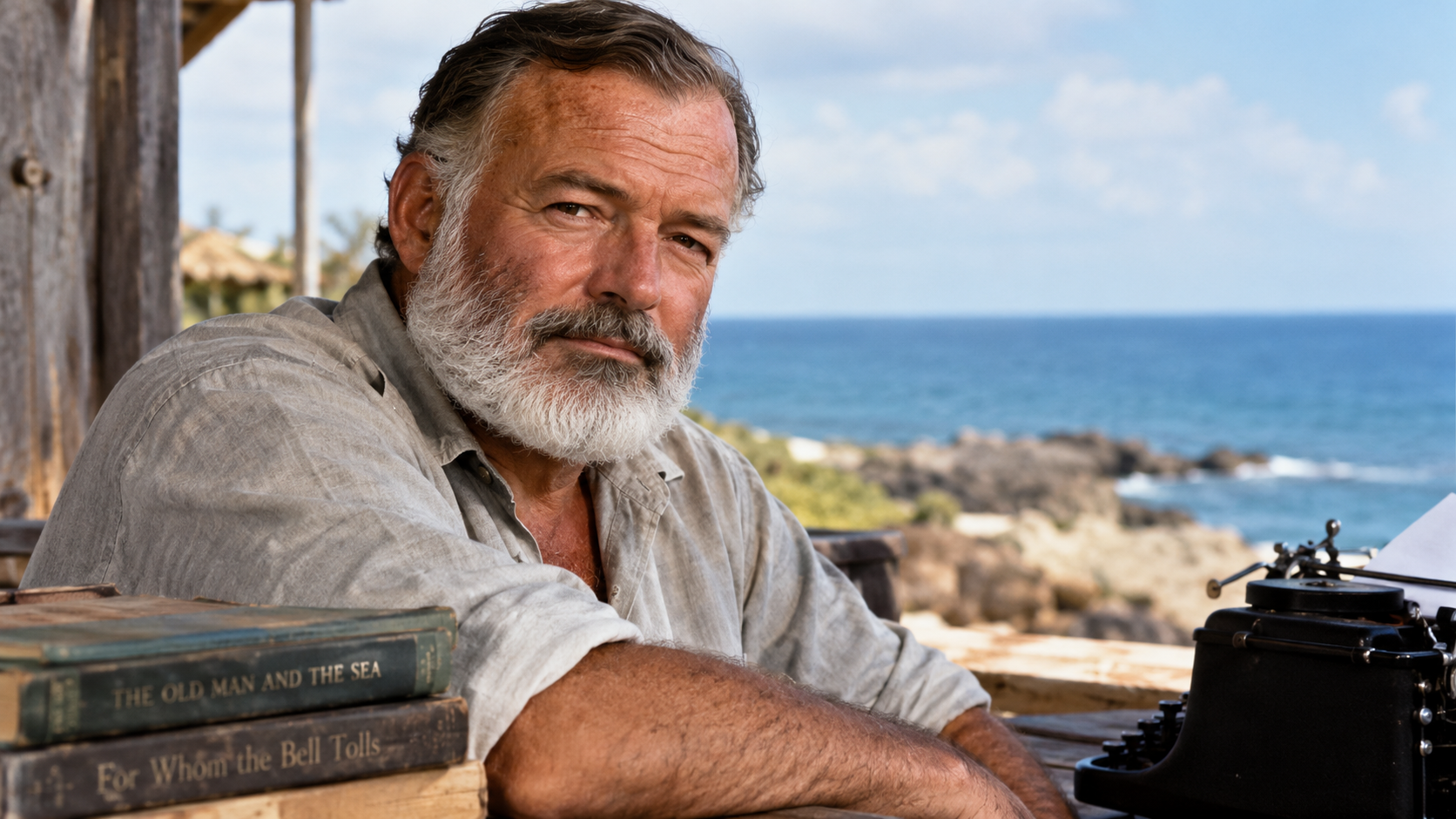
Take The Old Man and the Sea, the book that practically sealed the deal for the Nobel committee. It is a quick read about an old Cuban fisherman battling a giant marlin out on the water. There are no complicated tricks here. Just plain English that packs a real punch. As Hemingway famously explained his approach to his craft, “My aim is to put down on paper what I see and what I feel in the best and simplest way.”
Why He Still Matters Today
His simple approach is what makes his work stick around. It feels less like reading a book and more like listening to a friend tell a story at a bar. He wanted readers to feel the cold salt water and hear the creaking boat wood without any messy distractions.
Even though he won a massive prize, Hemingway stayed humble about the whole thing—or at least as humble as he could be. He admitted in his written acceptance speech that writing is a lonely life. You sit by yourself day after day, trying to capture something true, and you never really know if you pulled it off.
Winning the Nobel Prize proved he did so better than almost anyone else of his era. It put a giant stamp of approval on a lifetime of gritty work. And while he wasn’t one for big parties, the award cemented his spot in history books forever.
 Read Exclusive Stories
 Bookmark & Save Articles For Later