Farmers today face a massive challenge: they need to grow more food on the same amount of land, all while using fewer resources and minimizing their environmental impact.
To help meet that demand, agricultural tech giant Syngenta just announced a major scientific breakthrough. They have developed a new biological platform called EXORT™ technology, which uses a plant’s own natural mechanisms to significantly increase crop yields.

The Power of microRNAs
EXORT™ technology leverages a component that exists in all plants – microRNAs. These act like tiny sidekicks in the background, performing functions such as promoting plant growth, regulating resource utilization, and aiding recovery from stress. Essentially, each plant has a cheering section to support it in growing optimally. The discovery of the importance of these small molecules has opened up a whole new realm of research and has earned its discoverers the Nobel Prize in 2024.
Syngenta figured out how to harness these tiny messengers on a massive agricultural scale. When applied in very small doses directly to crop leaves, the EXORT™ product introduces highly selected natural microRNAs. These molecules signal the plant to optimize its use of biological resources, leading to healthier growth and greater resilience to changing conditions.
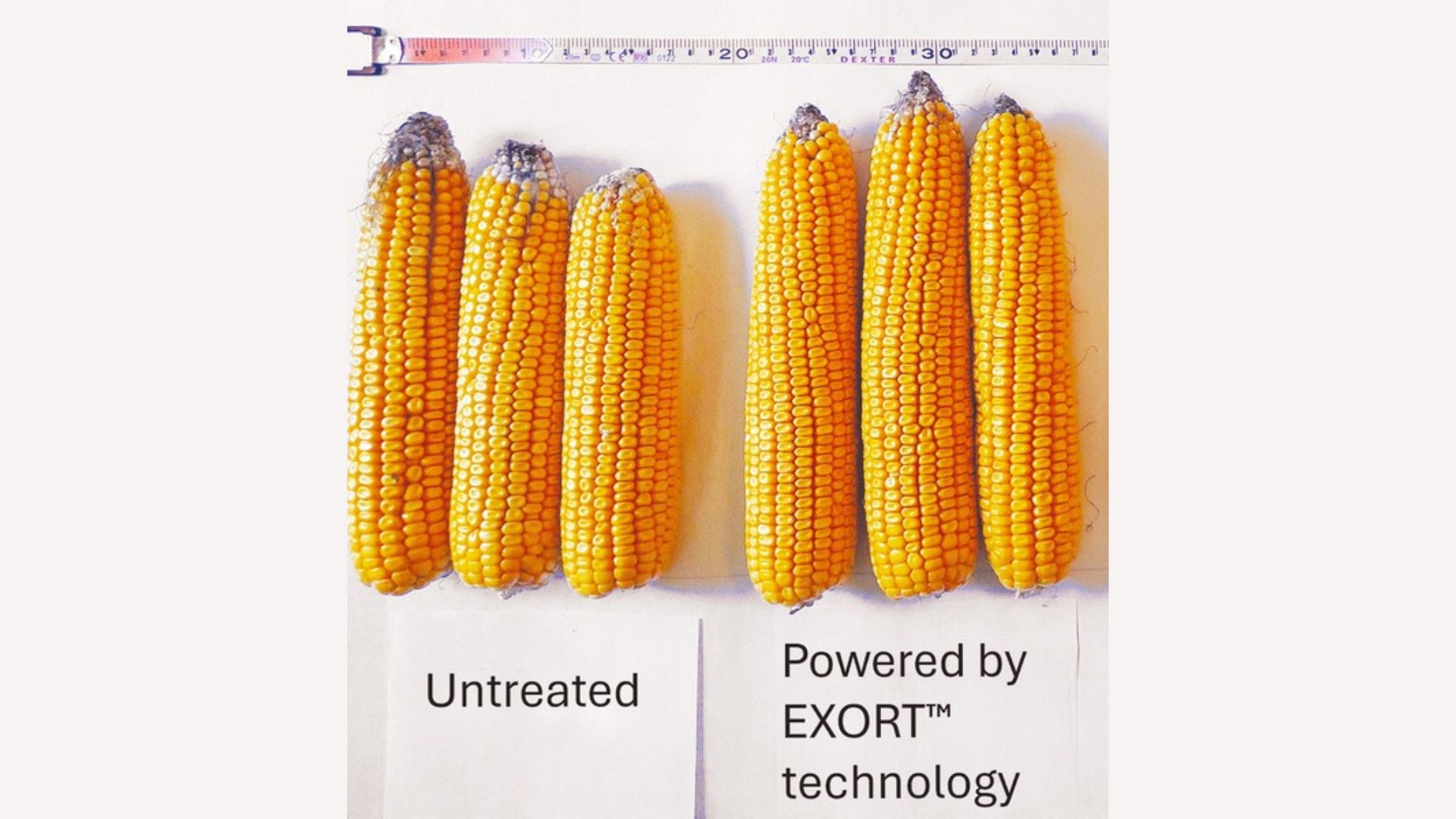
“What makes EXORT™ technology so exciting is that it translates a fundamental biological mechanism into a practical agricultural solution. Advances in genomics, bioinformatics and plant science now allow us to identify and apply beneficial natural microRNAs with unprecedented precision,” says Camilla Corsi, Syngenta’s Head of Crop Protection Research & Development. “This is a remarkable example of how breakthrough science can be harnessed to help crops perform at their best, while supporting more sustainable agriculture.”
Big Results Without Changing The Routine
One of the biggest advantages for farmers is that they do not have to overhaul how they currently run their fields. The technology is designed to seamlessly integrate into their existing routines, simply offering a new biological boost to the crops they are already growing.
During one of the largest biological field testing programs ever conducted, Syngenta applied the technology across multiple geographies over several years. The results showed consistent, significant yield gains across major global crops, including rice, soybeans, corn, cotton, and various fruits and vegetables.
By helping plants grow larger grains and better-quality produce using their own natural signals, Syngenta hopes to reduce the agricultural industry’s reliance on harsher synthetic chemicals. The company plans to officially launch the first products based on EXORT™ technology in 2027, with a phased rollout across 20 countries in the following years.
 Read Exclusive Stories
 Bookmark & Save Articles For Later