In the nuclear fusion world, Thea Energy published a detailed, 16-page paper outlining its proposed Helios power plant. The power plant’s design could provide about 400 megawatts of continuous electricity to the grid. Additionally, as stated in the publication, it can do it safely, without plasma disruptions that have infamously held other designs back.
Fixing Fusion’s Problem
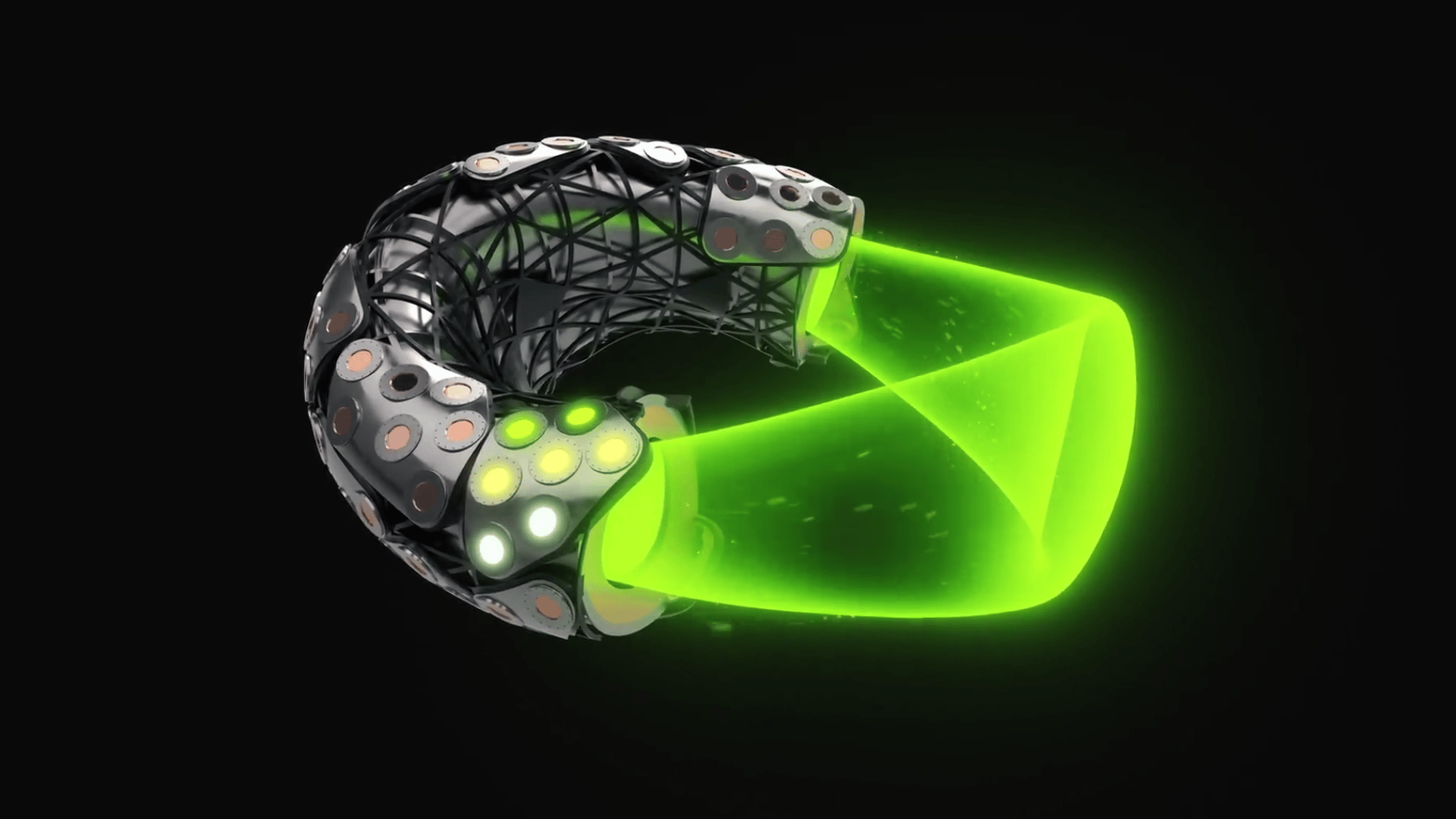
According to Thea Energy, a glaring flaw in older fusion designs is their reliance on complex three-dimensional coils. Instead, Thea Energy states it fixes this with flat coils and a “much more effective” exhaust system.
“The Helios power plant is technically viable, robust, and requires no scientific miracles to commercialize,” David Gates, Ph.D., co-founder and chief technology officer of Thea Energy, explained. “We have combined a sound physics basis with realistic engineering into a power plant that eliminates the complex, modular 3-dimensional coils that have historically been the stellarator’s ‘Achilles’ Heel’.”
Gates went on to emphasize how their system has a “unique ability to operate continuosly in the event of manufacturing deviations and operational wear.” According to the CTO, this makes fusion power plants cost-effective and good enough to be commercially available.
Advertisement
“All things truly novel require thoughtful review and verification from external experts,” Gates added. “We have the underlying science and engineering vetted by the global fusion community for the planar coil stellarator and are moving into industrial implementation.”
Built for Commercial Use
Adding to the system’s ability, the company states that the plant uses “known material,” which contributes to its high-capacity factor. The plant is also built to run for over 40 years, and designed for easy maintenance. Helios’ design is already approved by the U.S. Department of Energy, and Thea Energy expects the plant to be operational in the 2030s.
According to Sophia Henneberg, assistant professor of Nuclear Science and Engineering at MIT and co-guest editor of the paper, “Stellarators are a mature magnetic confinement fusion technology, but historically, complex coil geometries have constrained engineering choices.”
Henneberg added, “This special issue of FED presents Thea Energy’s preconceptual Helios design as a systematic, multidisciplinary body of work. It is a substantive contribution to the stellarator power plant design literature, and an important example of the private fusion sector submitting its work to rigorous peer review.”
 Read Exclusive Stories
 Bookmark & Save Articles For Later