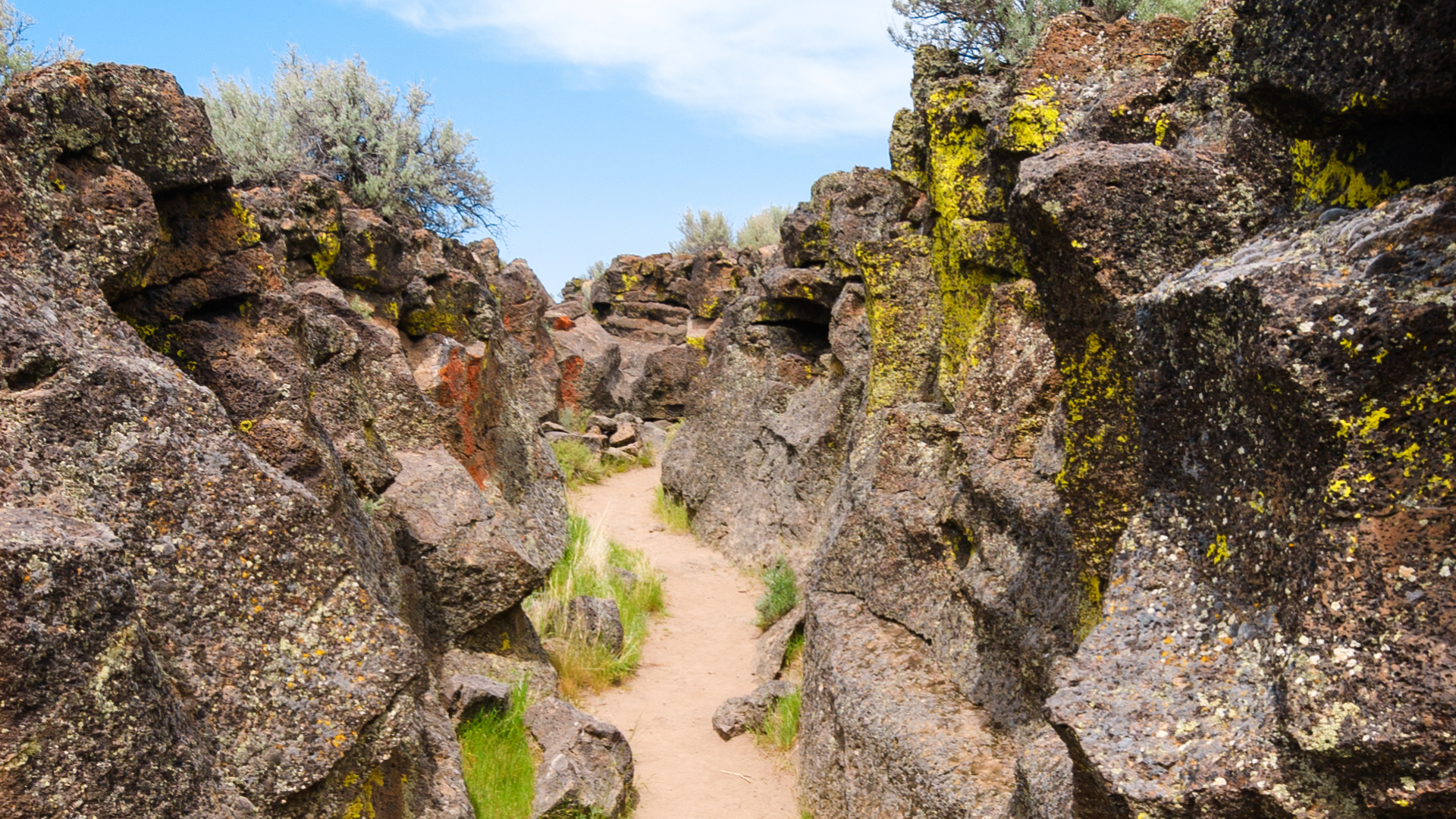
If you drive up to the very top of California near the Oregon border, you find a high desert that looks totally flat and quiet. The ground is covered in tough sagebrush and scattered rocks. But the real landscape is actually hiding right under your feet.
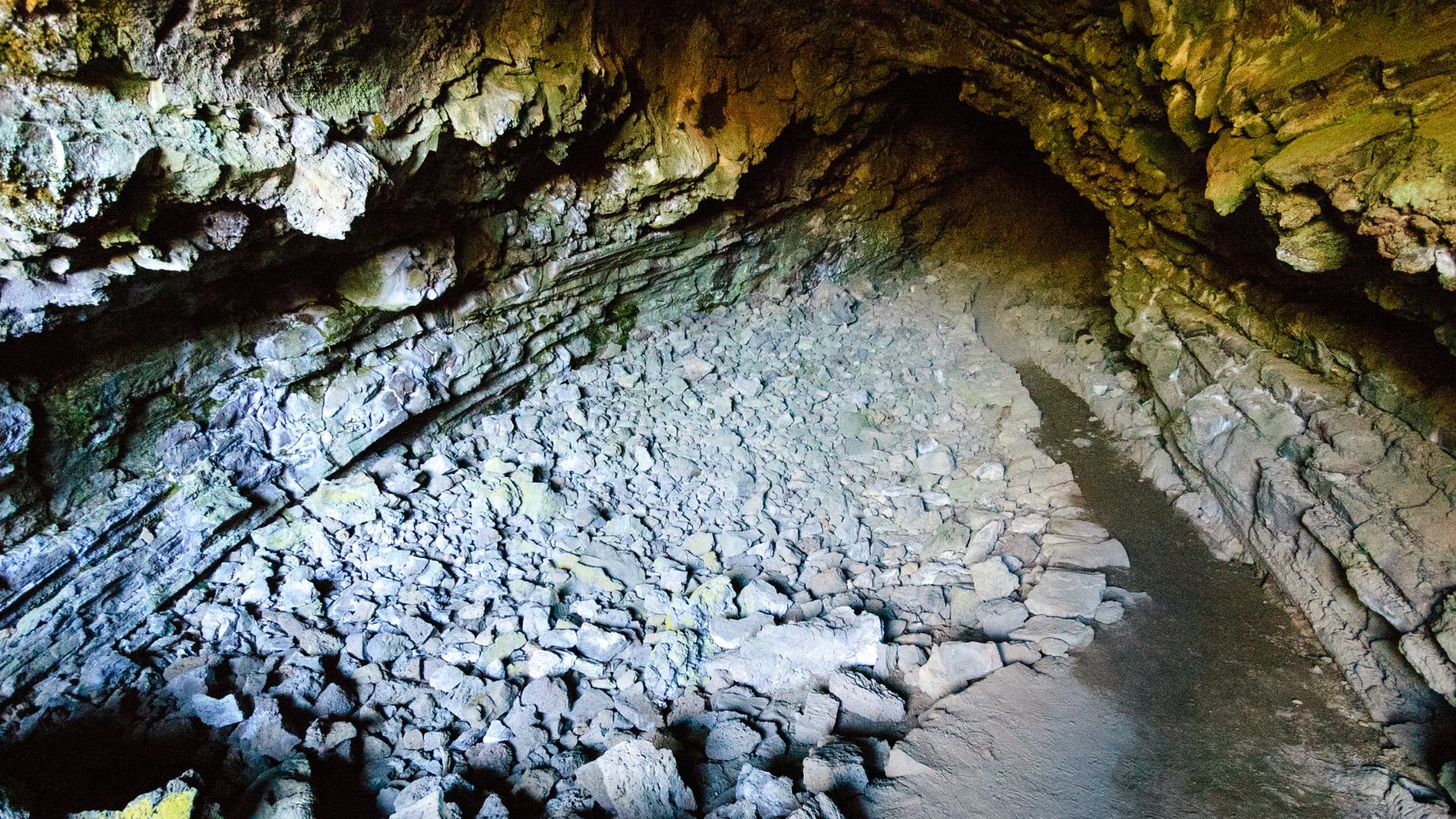
This is Lava Beds National Monument. The ground here is completely hollowed out. More than 800 separate caves are twisting below the surface. And none of them were carved out by water or wind. They were made entirely by fast-moving liquid rock.
Built From Liquid Rock
Most caves you hear about, like the ones in Kentucky or Virginia, are made of limestone that slowly dissolved over millions of years. Lava tubes are different. They form incredibly fast.
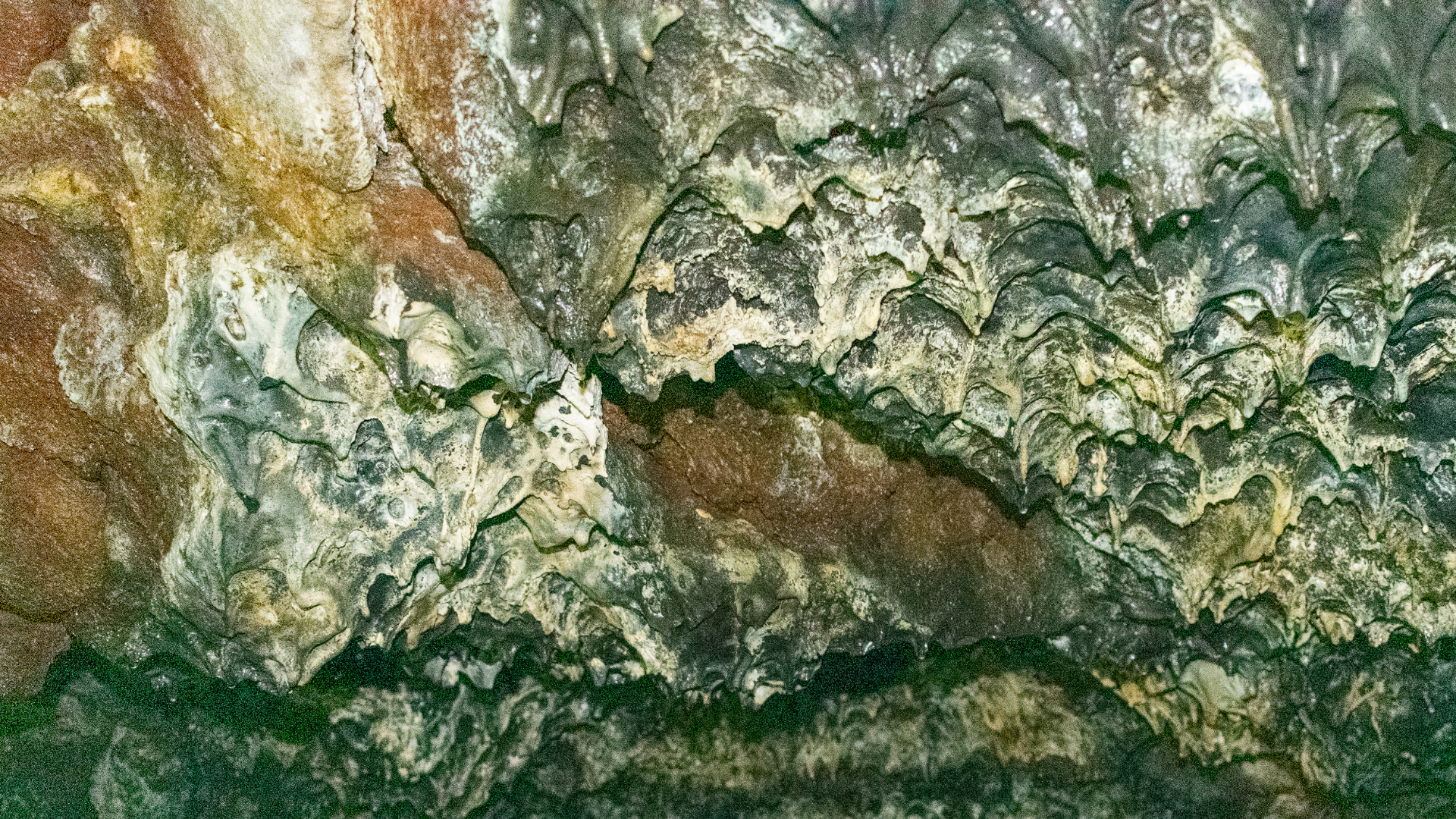
Thousands of years ago, the Medicine Lake volcano erupted. It sent massive rivers of superheated, liquid basalt flowing across the flat ground. As this lava river flowed, the top layer cooled and hardened into a solid crust. But underneath that thick rock ceiling, the lava was still incredibly hot. It kept flowing like water through a pipe.
Eventually, the eruption stopped. The last of the liquid lava drained away down the hill, leaving behind an empty rock tunnel. So when you walk through one of these caves today, you are just walking through the ghost of an ancient lava river.
Ice In The Desert
Advertisement
Because the ground is made of thick, dark rock, it absorbs a lot of heat during the summer. It can easily get over 100 degrees on the surface. But if you climb down into the right cave, you will find solid ice.
Some of the lava tubes have a very specific shape. They trap cold winter air deep underground, where the sun cannot reach it. In places like Skull Cave or Crystal Ice Cave, the air stays so cold all year long that thick floors of ice sit right at the bottom. It creates a completely strange environment where you can step out of a blazing hot desert and walk right onto a frozen underground pond.
A Perfect Hideout
These empty tubes create a natural shelter in a place where it is very hard to survive.
Today, fourteen different species of bats live in the caves. They use the dark, quiet tubes to sleep during the day and raise their young. But humans used them too. During the Modoc War in the 1870s, a small group of Modoc Native Americans actually held off the U.S. Army for months. They survived simply because they knew exactly how to navigate the miles of hidden lava tubes while the soldiers remained stuck above ground.
It is a great example of how a violent volcanic eruption can leave behind a landscape that protects life rather than destroys it.
 Read Exclusive Stories
 Bookmark & Save Articles For Later