Administering the correct dosage of medicine is critical. However, for some medications, doctors must administer the drug at a very slow rate over an extended period. The flow rate may be as low as a nanoliter per minute. To put this in perspective, consider splitting a one-liter bottle of water into a billion portions.
Handling such tiny amounts of liquid safely takes special technology. Doctors also need to know the exact flow rate to make sure each patient gets the right amount of medicine at just the right moment.
Current Technology: Problems
The current technology used to measure flow rates in the clinical setting is known as a flowmeter. These instruments perform well at typical flow rates. However, when extremely low flow rates in the nanoliter-per-minute range are measured, these instruments exhibit poor performance. The instruments may be slow responding, fussy, and/or inaccurate.
Using an inaccurate flowmeter for a medical application could have serious consequences for patients in a hospital. For this reason, researchers at the National Institute of Standards and Technology (NIST) began searching for a more accurate method for measuring fluid flow rates. The new technique uses math and lasers.
Measuring Medicine With Lasers
To address the issue with flowmeters, scientists turned to light. First, a small amount of fluorescent dye is added to the fluid to be measured. This fluid is then pumped through a narrow tube while a laser is fired through the tube.
Advertisement
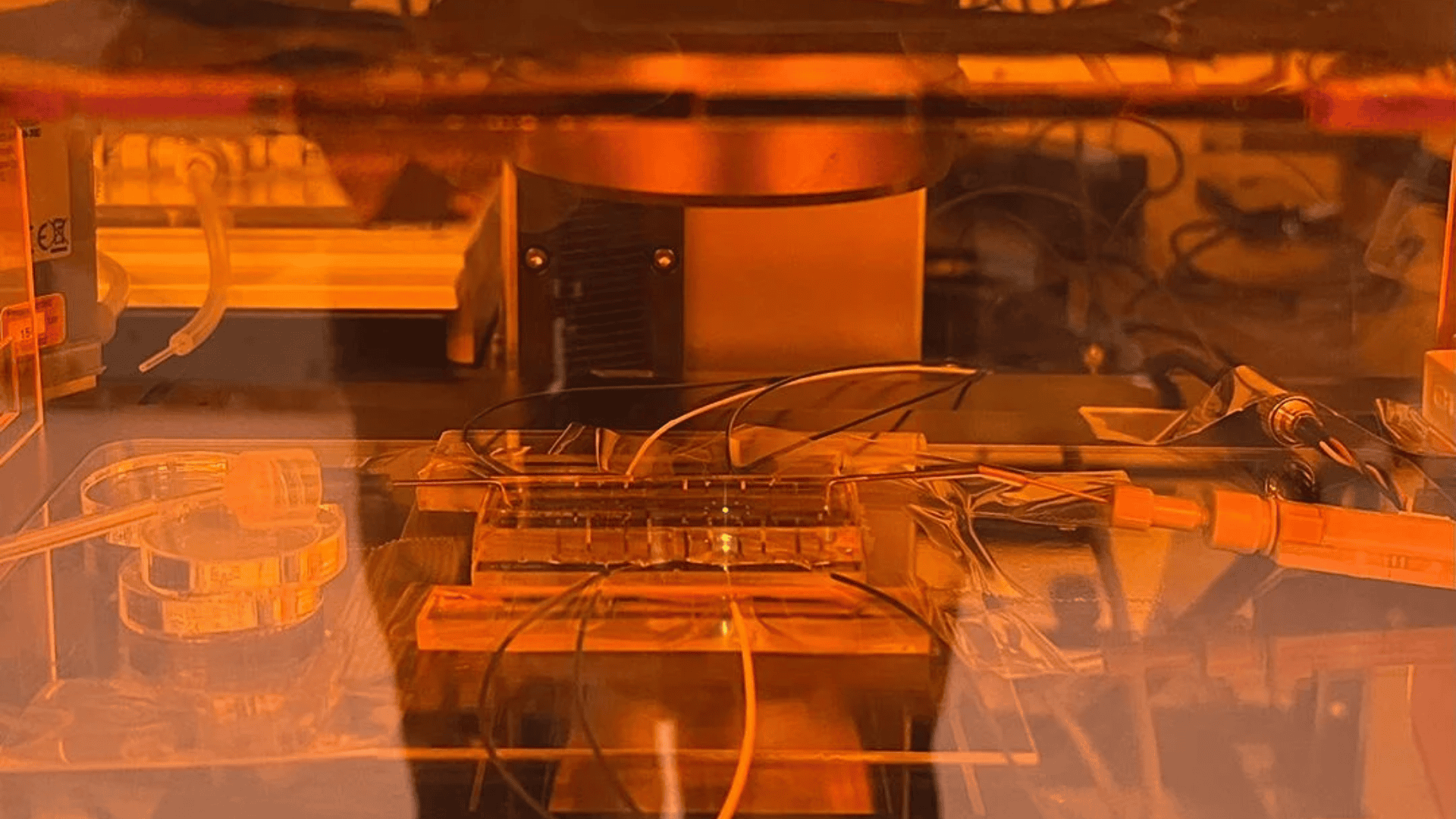
When the laser hits the dye in the fluid, the dye lights up, or fluoresces. But this glowing doesn’t last forever. After a while, the dye molecules wear out—they absorb and give off light a set number of times, then burn out and stop glowing. Scientists call this photobleaching.
So, what does this mean for medicine? The brightness of the dye’s light depends on how quickly the fluid is flowing. If the liquid moves slowly, the dye spends more time in the laser and burns out faster, which makes the light dimmer. If the fluid moves quickly, the dye zips through the laser, glows more, and the light is brighter. By measuring how bright the dye is, scientists can figure out how fast the fluid is moving.
How Math Completes The Picture
While the laser method is novel, further improvement is necessary. Having a general understanding of light emission is insufficient for medical applications. One must also understand the behavior of the fluid for small changes in flow rate.
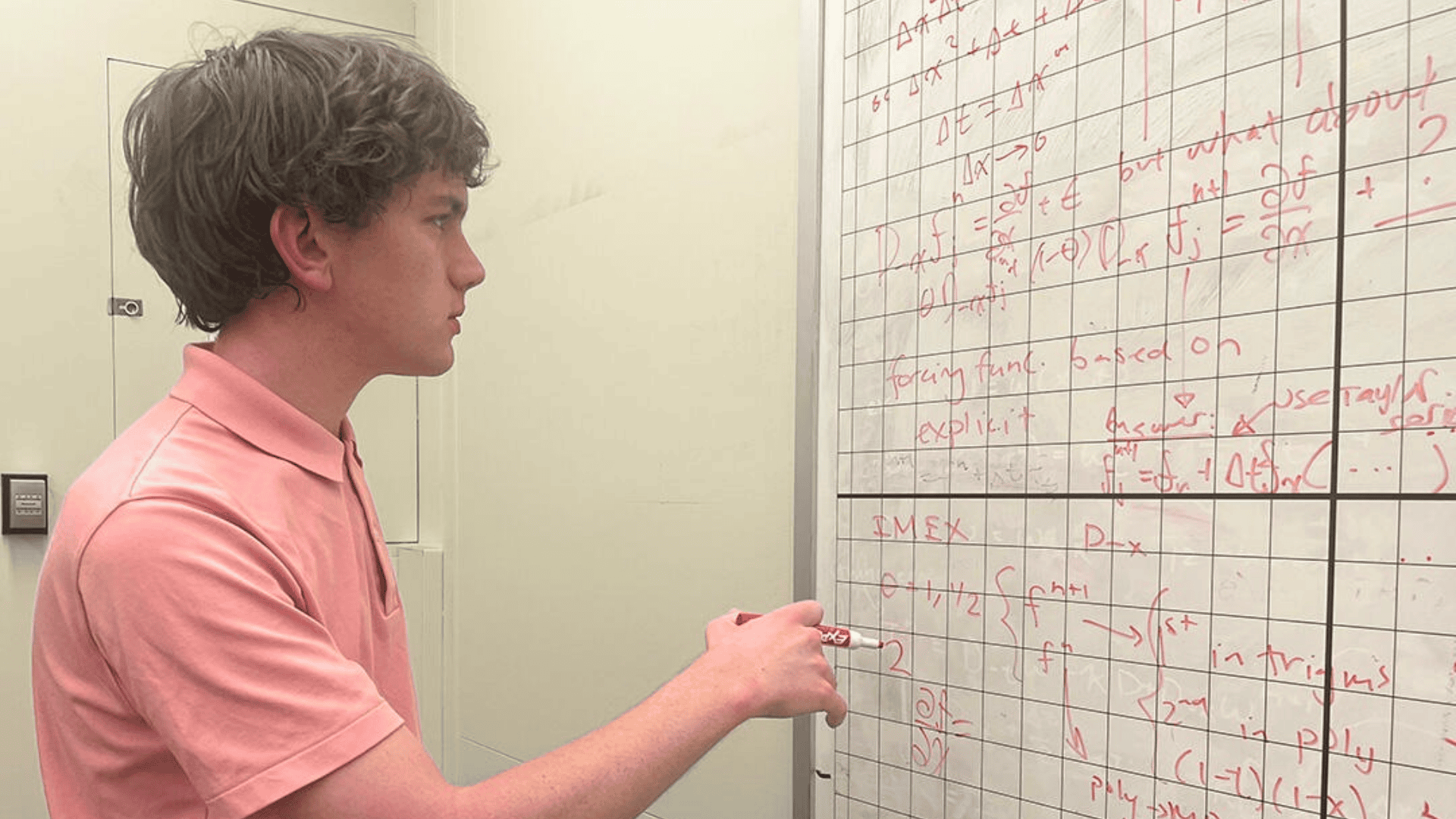
This is where math comes in. A recent intern at NIST collaborated with researchers to develop a specialized mathematical computer simulation. This simulation models the dye’s motion within the flowmeter. Using this simulation, researchers can then model the system’s response to small changes in flow rate, even on the order of a fraction of a nanoliter.
By combining the physical laser with the mathematical simulation, researchers are making great strides towards creating a highly accurate flowmeter. This device has the potential to be used in hospitals to deliver very small, precise amounts of medication safely.
 Read Exclusive Stories
 Bookmark & Save Articles For Later