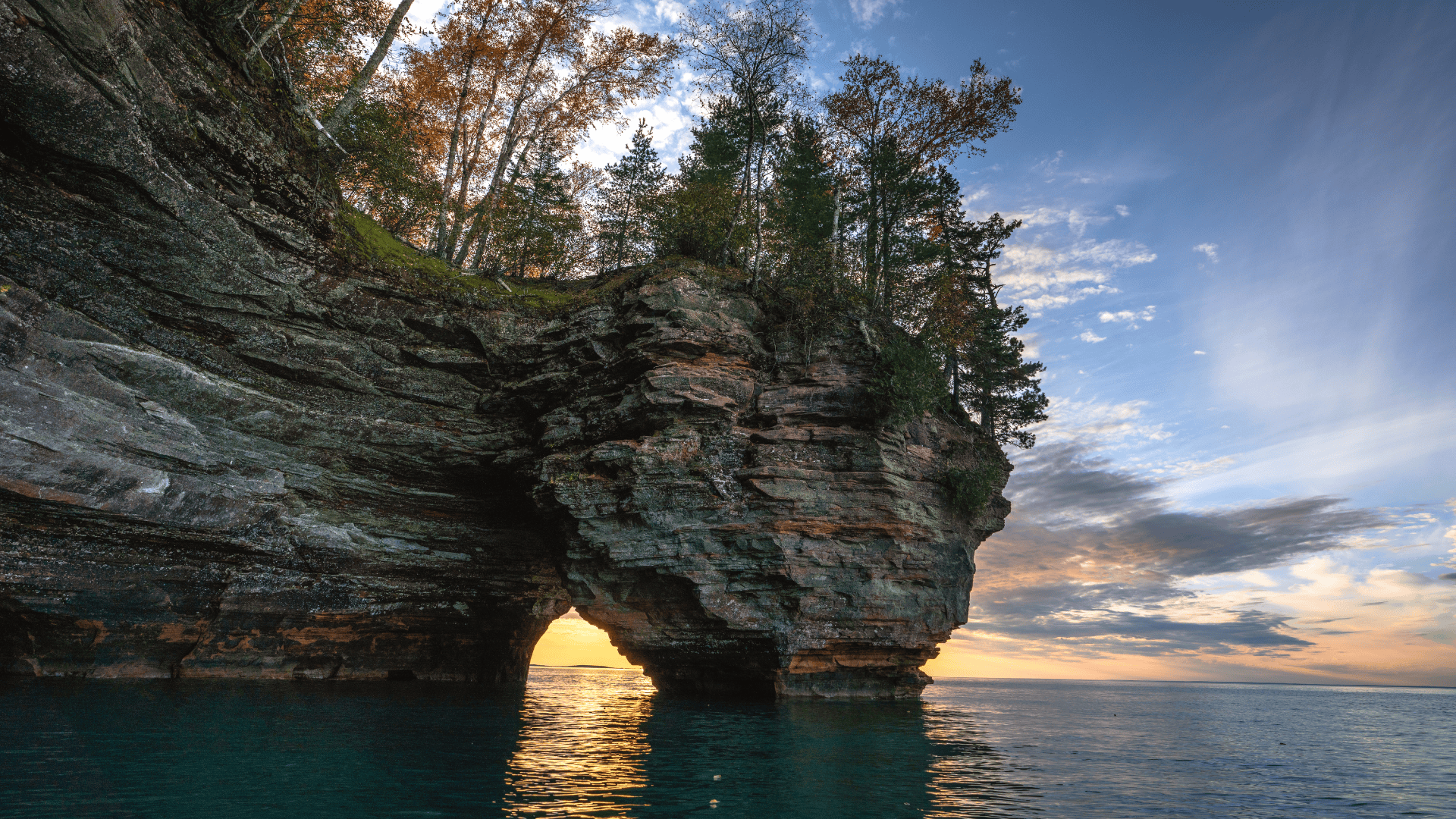
Along the northern edge of Wisconsin, sandstone cliffs drop straight down into Lake Superior. This area is known as the Apostle Islands National Lakeshore. During the summer, kayaks zoom through the sea caves. However, these sea caves were not formed by rivers or kayaks. Formed due to one of the largest freshwater lakes on Earth continuously hitting the sandstone cliff.
Wave Action and Ancient Sandstone
To understand how these sea caves formed, the rock must be examined. The sandstone cliffs along the Apostle Islands are composed of Devils Island sandstone. This sandstone formed around a billion years ago from sand deposited by an ancient river. Due to the thin, weak layers of sandstone, it breaks easily when exposed to water.
As the wind howls at the cliffs of Lake Superior year after year, the force of the water against the base of these rocks wears them down.
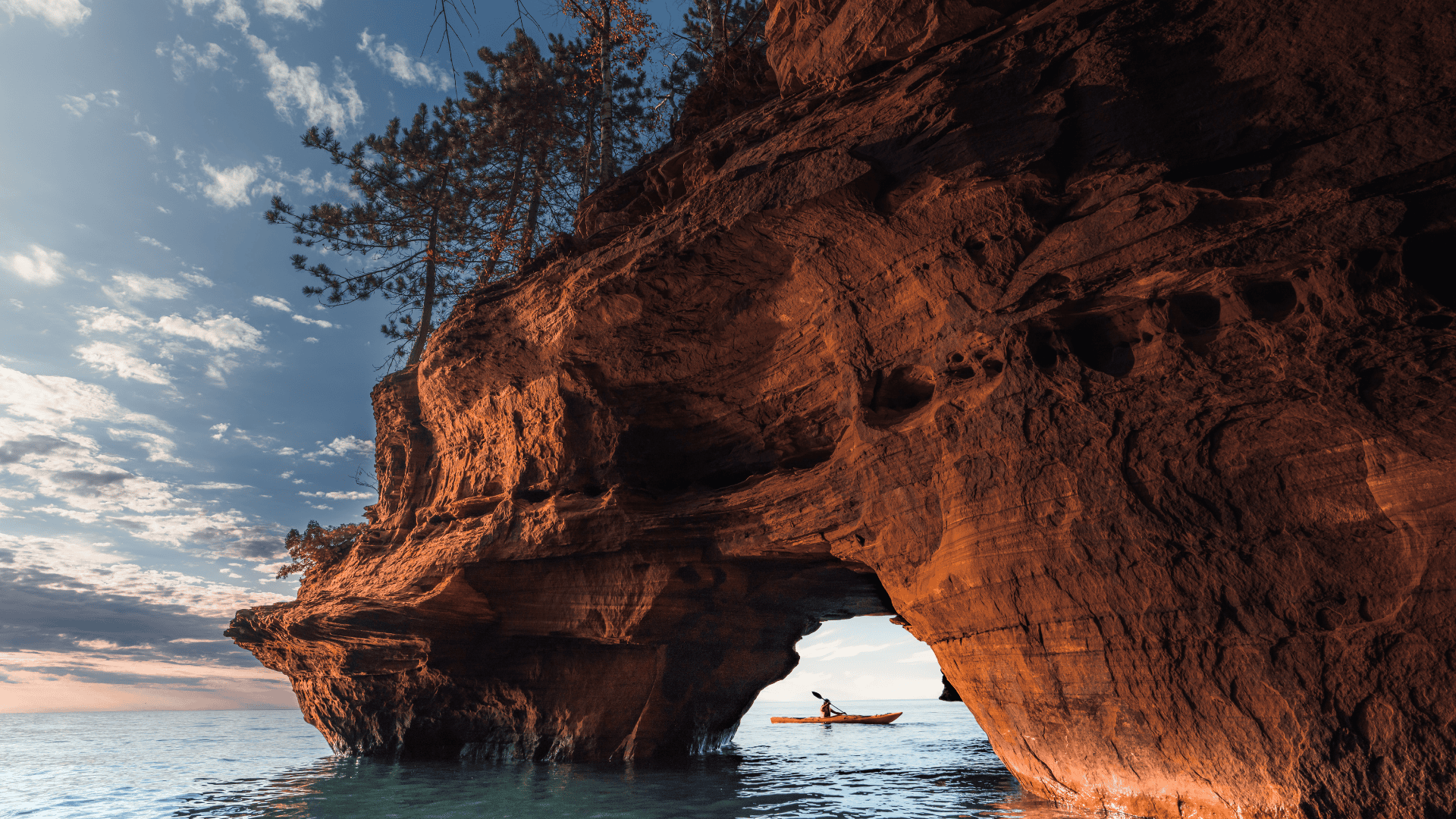
The constant movement of water into the cracks in the rocks causes them to crumble over time. As a result, there are many deep hollows, arches, and rooms in the sandstone that extend beneath the land.
The Winter Ice Transformation
While the summer months may draw tourists of all ages into the caves in the cliffs to explore them by water, the winter months transform the area into an entirely new destination.
Advertisement
When the temperature drops below freezing during the winter months, the water that percolates through the sandstone ceiling freezes into ice formations. These icicles range in size and hang from the ceilings of the rock formations, as well as form waterfalls of ice that coat the red rock formations in blue and white ice.
At the same time, Lake Superior also freezes over near its shore. The ice on the lake is thick enough for people to walk across it to enter the caves on foot. This is a completely different experience from traveling to the caves by canoe or paddle boat in July.
A Landscape Under Attack
The same geological processes that carved the caves of Lake Superior were also slowly destroying them.
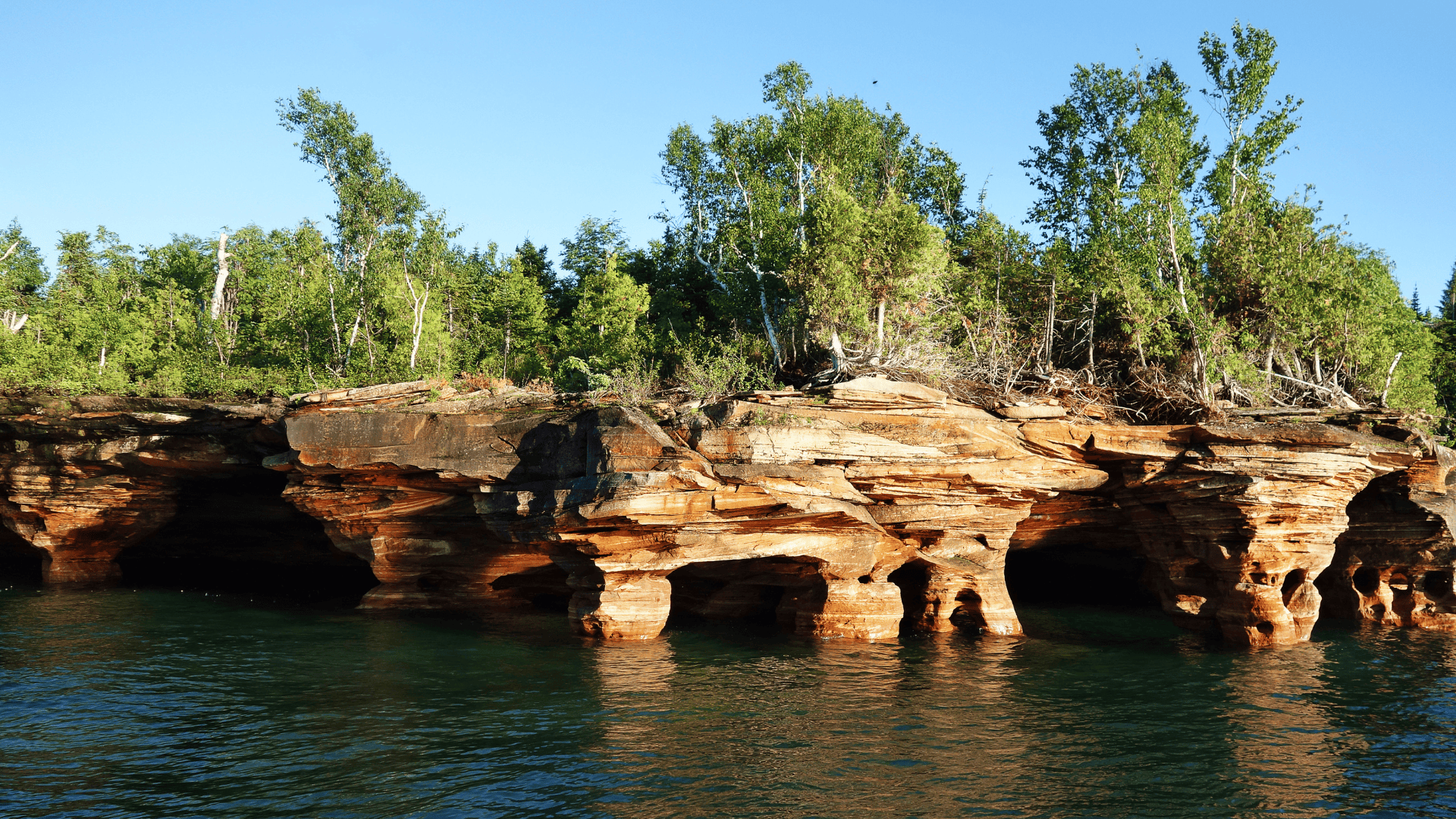
The winter months create ice in the cracks of the sandstone formations, causing massive slabs to fall into the lake. Additionally, the summer months see the lake experience powerful storms that continue to batter the exposed sandstone formations within the caves. These arches eventually collapse into the lake, leaving behind the rock pillars that remain within it.
This slow process of continual destruction and creation of the caves of Lake Superior ensures that as one cave collapses into the lake, another is carved into the sandstone formations adjacent to the caves that fell into the water.
 Read Exclusive Stories
 Bookmark & Save Articles For Later