From a distance, the hillside in southwestern Turkey appears to be a giant frozen glacier. The white terraces seem to descend the mountain as if made of ice or cotton.
In fact, the local name for the site translates to “cotton castle.”
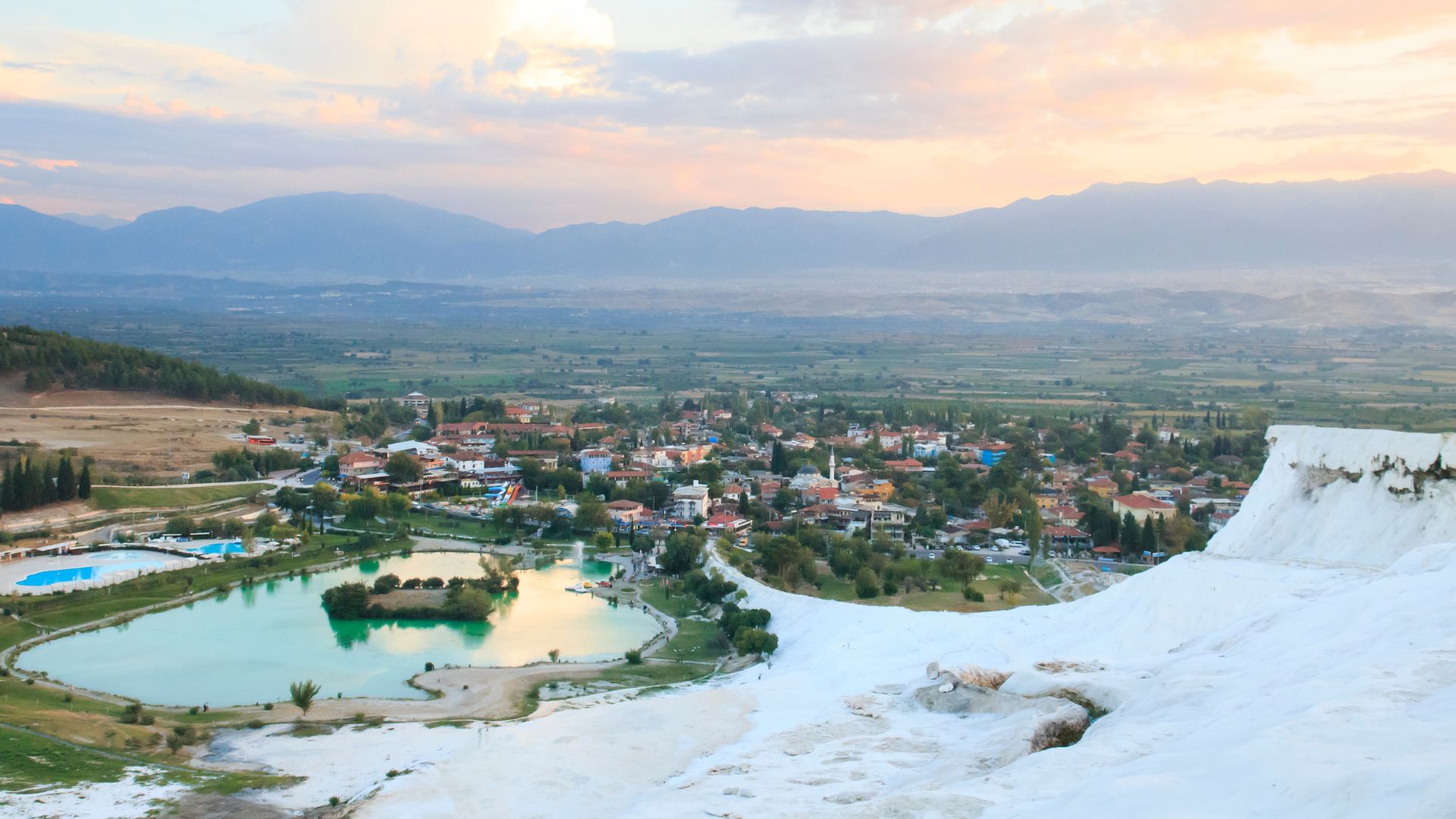
As you get closer to the site, however, the cold mountain air dissipates. The terraces appear as rock-hard as stone, with a series of bright blue pools within them, filled with warm thermal water.
Hot Springs and Liquid Calcium
The source of the thermal water originates deep underground from volcanic activity. The water reaches temperatures of around 95 degrees Fahrenheit before it begins to interact with deep limestone layers in the area. This limestone contains high amounts of the mineral calcium carbonate.
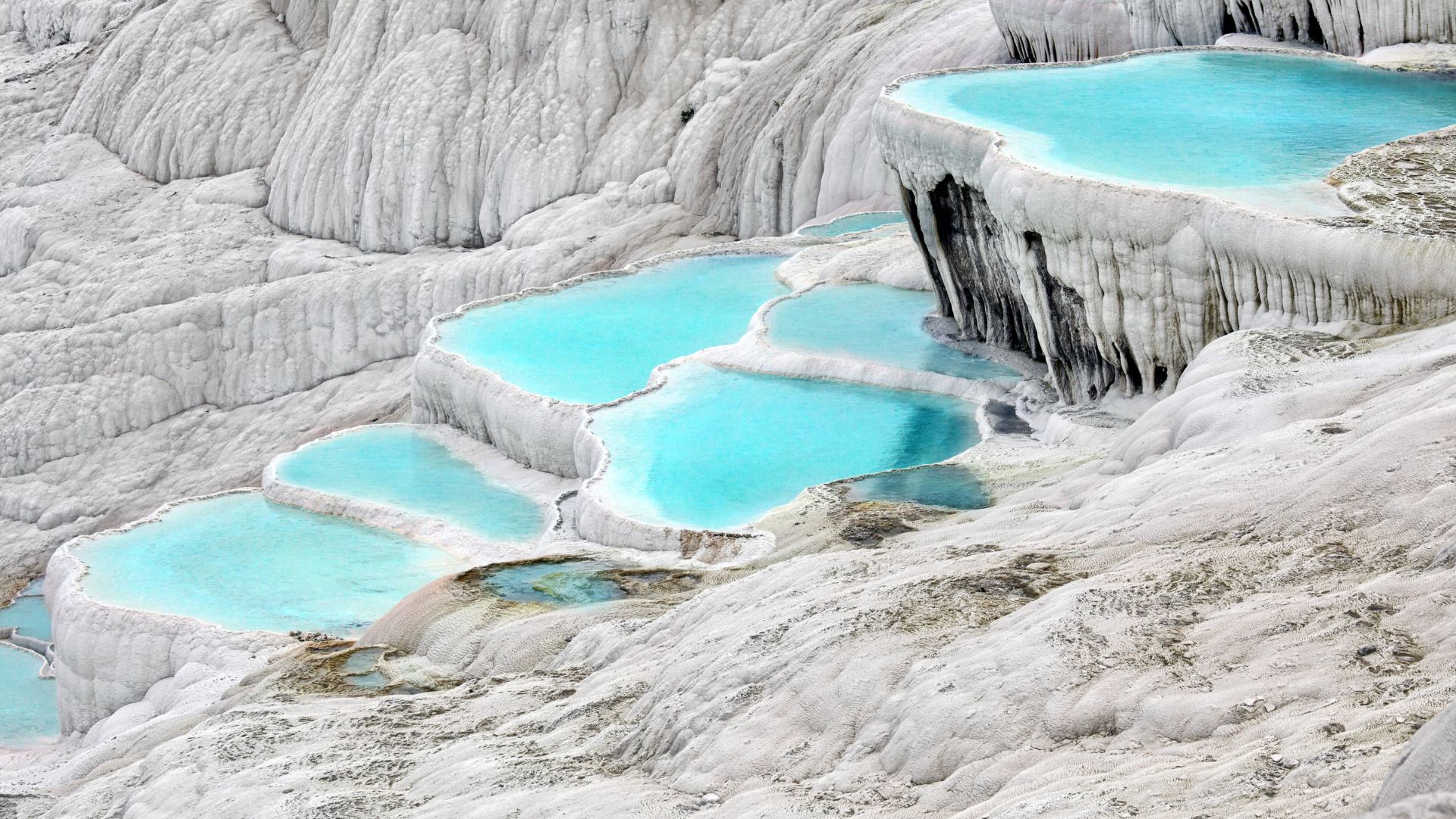
When the water erupts from the springs at the top of the cliff, the carbon dioxide in the water exits into the atmosphere. This same process occurs when carbonated water in a soda bottle emerges from the liquid when the bottle is opened.
Advertisement
Due to the escape of these dissolved minerals, more calcium carbonate from the water sets into a soft, gel-like substance known as travertine. Over thousands of years, this travertine has built up into the pools and cliffs of Pamukkale.
A Landscape Built in Real Time
The travertine deposits continue to form at the site. Water from the hot spring continues to flow over the cliffs of Pamukkale and adds more travertine layers to the rock structures each day.
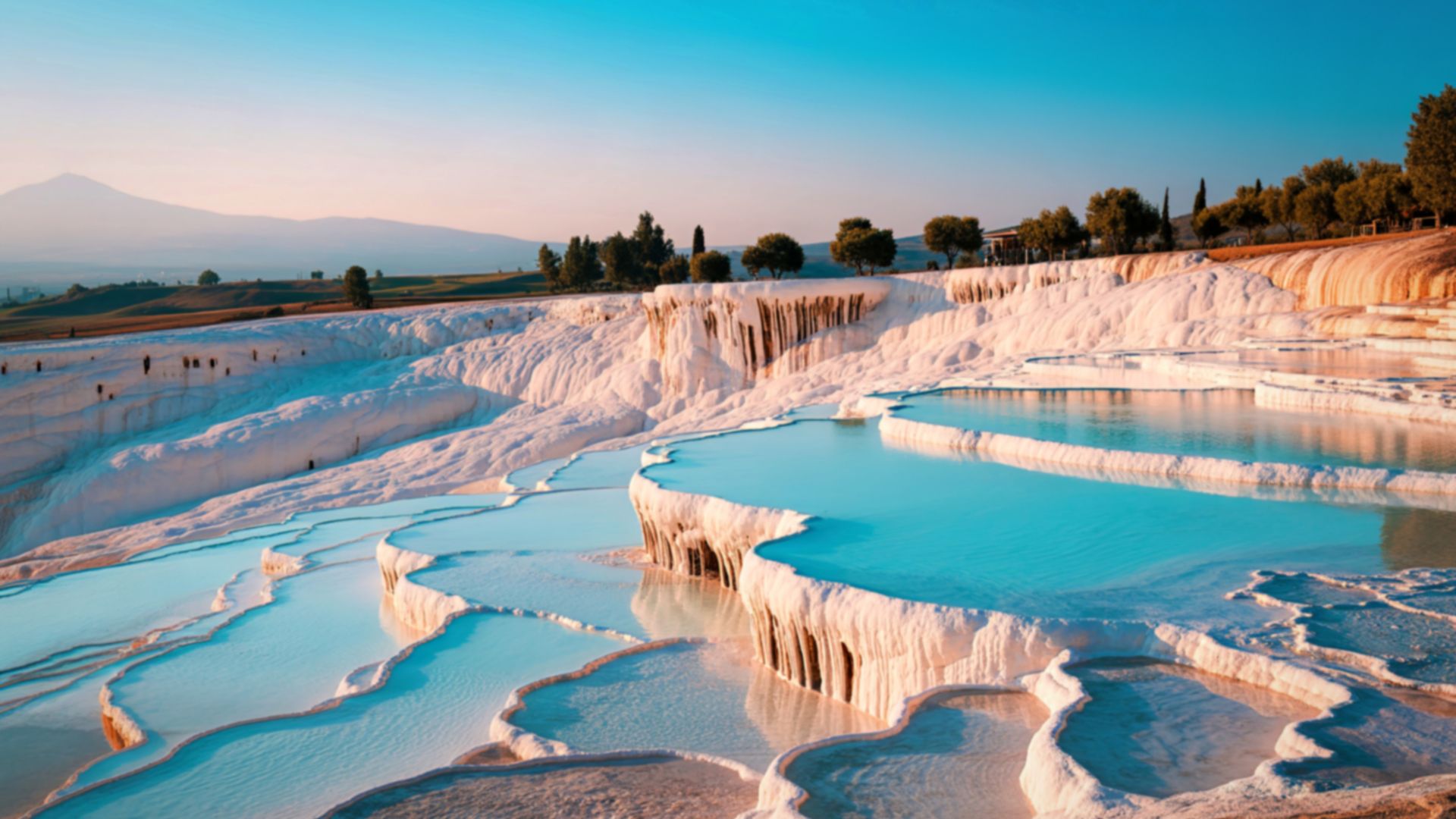
This site is not only thousands of years old but has been visited by adventurers from around the world for thousands of years. The Romans built a spa resort, Hierapolis, on the spot so that people could bathe in the mineral water there.
The local authorities have built a walking path for visitors to the site. Due to the fragile makeup of the travertine structures, visitors are required to stay on the path. This allows the natural formation of minerals deep below the ground to continue to emerge from the spring and form the white mountain visible in the hot sun.
 Read Exclusive Stories
 Bookmark & Save Articles For Later