When you think of rainforests, you likely think of the sweltering jungles of the Amazon or Costa Rica. However, tucked away in the Pacific Northwest of the United States is a different kind of jungle.
Located on the Olympic Peninsula of Washington is the Hoh Rain Forest, which ranks among the world’s largest temperate rainforests. The forest is home to vast amounts of moss that blanket almost every surface.
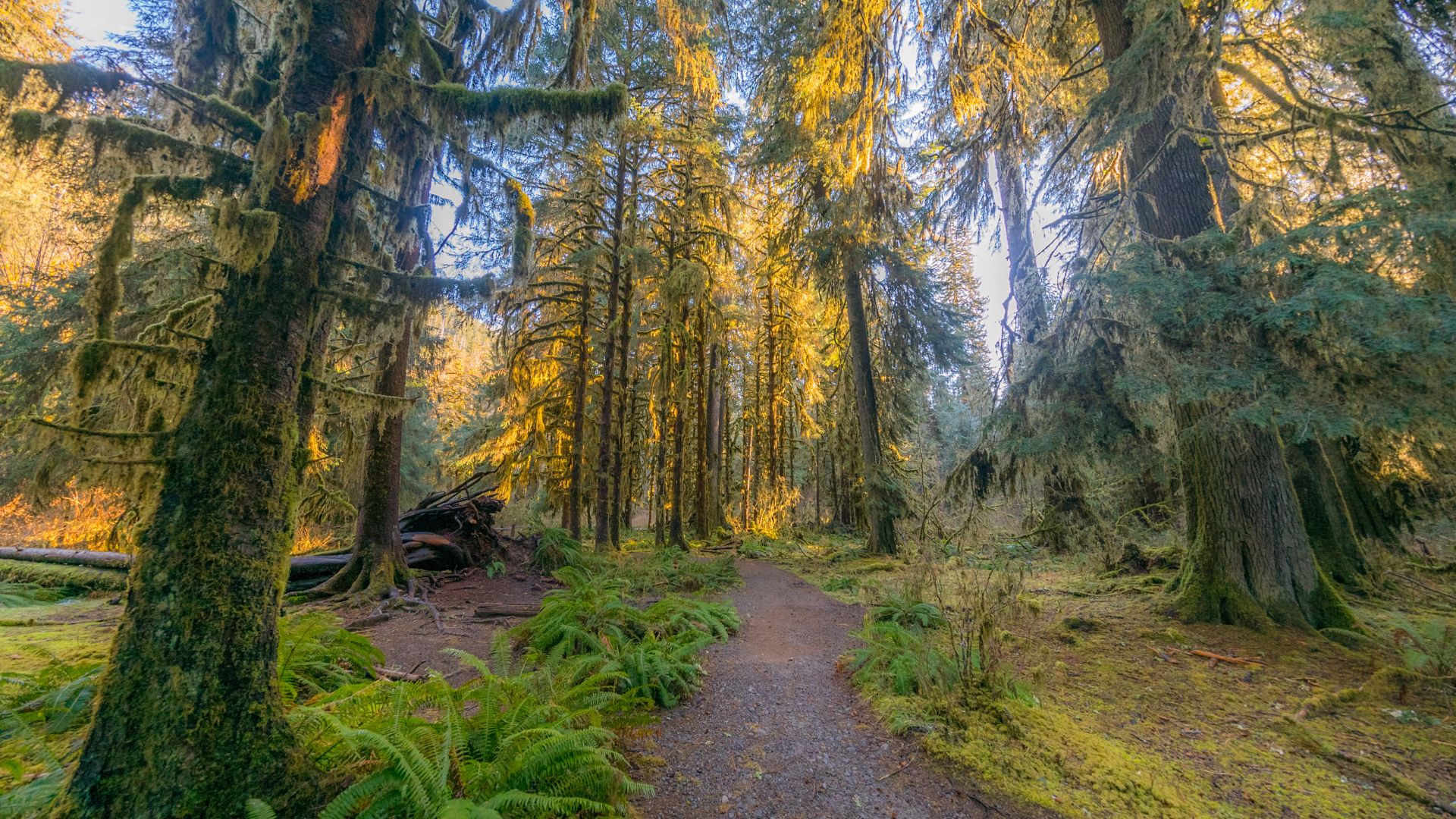
Creating the Rain
The key to the abundance of moss in the Hoh Rain Forest is the amount of rainfall it receives each year. At an average of 140 inches of rain per year, the Hoh Rain Forest receives an immense amount of precipitation. For comparison, the closest city to the Rain Forest, Seattle, receives only about 37 inches of rain per year.
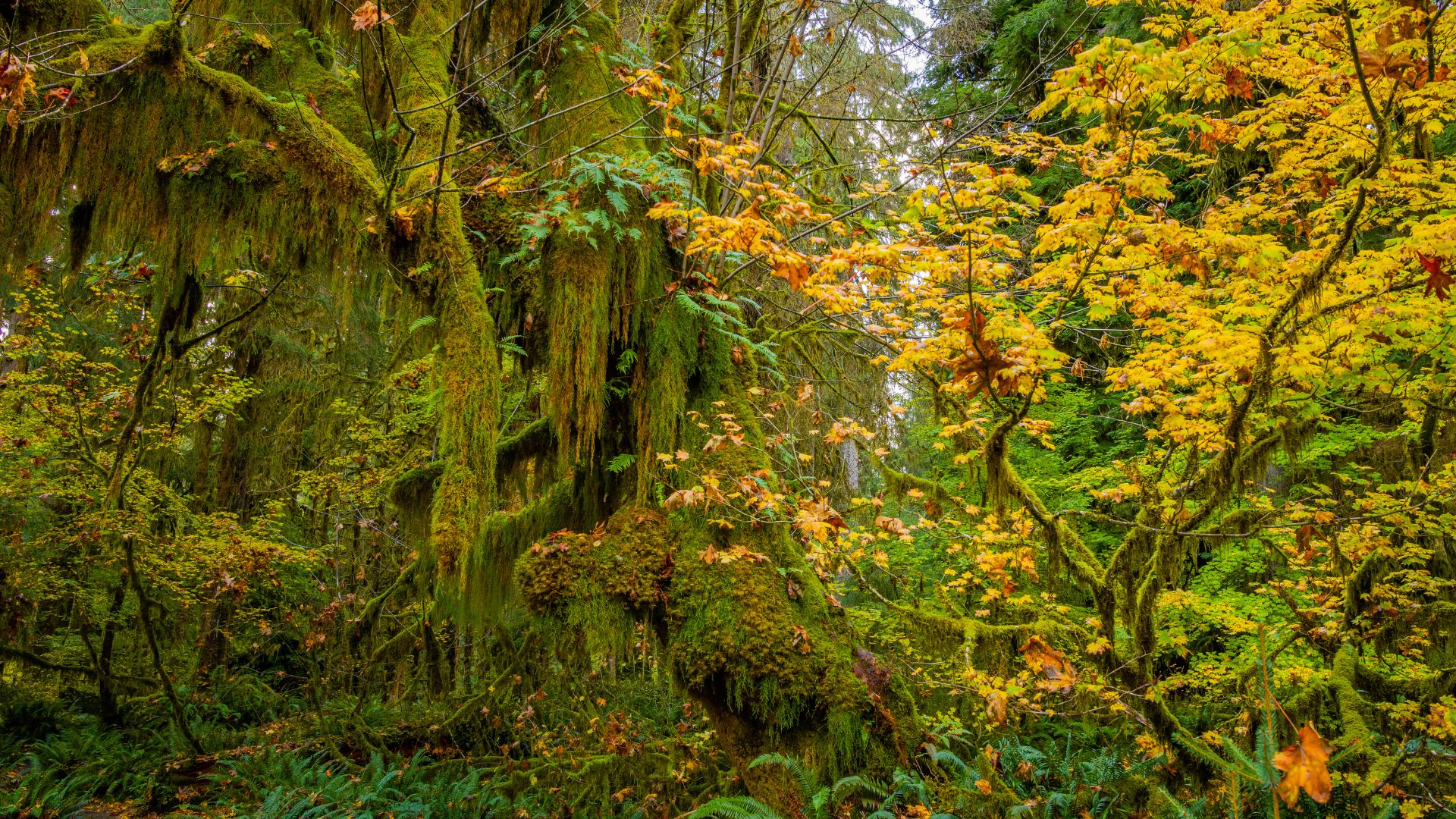
This weather is the result of orographic lift. The moisture-heavy storm systems that roll off the Pacific Ocean crash into the Olympic Mountains during the winter. The mountains force the clouds to rise into the cooler air above the ocean, causing the moisture in the clouds to condense and fall as rain into the valleys below the mountains.
Plants Growing on Plants
Advertisement
Another oddity of the Hoh Rain Forest is the abundance of epiphytic plants. Epiphytes are plants that grow on other plants without being parasitic to derive nutrients from the plants upon which they grow. Most of the mosses, lichens, and ferns that populate the forest grow on the massive number of Sitka spruces and Western hemlocks that populate the area. Rather than needing to collect nutrients from the soil, these plants absorb the moisture and nutrients directly from the air and rain that fall in the forest.

Life from Decay
Due to the abundant moisture in the Hoh Rain Forest, trees often do not remain dead for long. When one of these trees falls to the forest floor, it becomes a nurse log.
Because the forest floor is often covered in moss, the area is too rich in nutrients for seeds to find room to germinate. Thus, the seeds of new trees will sprout up on top of the nurse logs. As the logs continue to decompose, they continue to provide nutrients and water to the newly sprouted trees. Eventually, however, the nurse logs will decompose completely, leaving only the newly sprouted trees standing on exposed roots.
 Read Exclusive Stories
 Bookmark & Save Articles For Later