Getting a rocket into space is expensive. Most of that cost comes from the engines and the systems that keep the vehicle pointed in the right direction. To bring those costs down, researchers at the Fraunhofer Institute IGCV are working on a new way to build rocket parts using 3D printing. Instead of just using one metal, they are finding ways to “print” multiple materials at once.
This process uses lasers to melt different metal powders together. It means engineers can create a single part that has different properties in different areas, like being hard on one side but rust-resistant on the other.
“With this manufacturing process, we can customize components directly on the computer and print them immediately,” explained Constantin Jugert, a scientist at Fraunhofer IGCV. “The enormous flexibility saves us lead times and allows for rapid iterations when requirements change. This saves weeks in development.”
Printing Metal For Rocket Propulsion
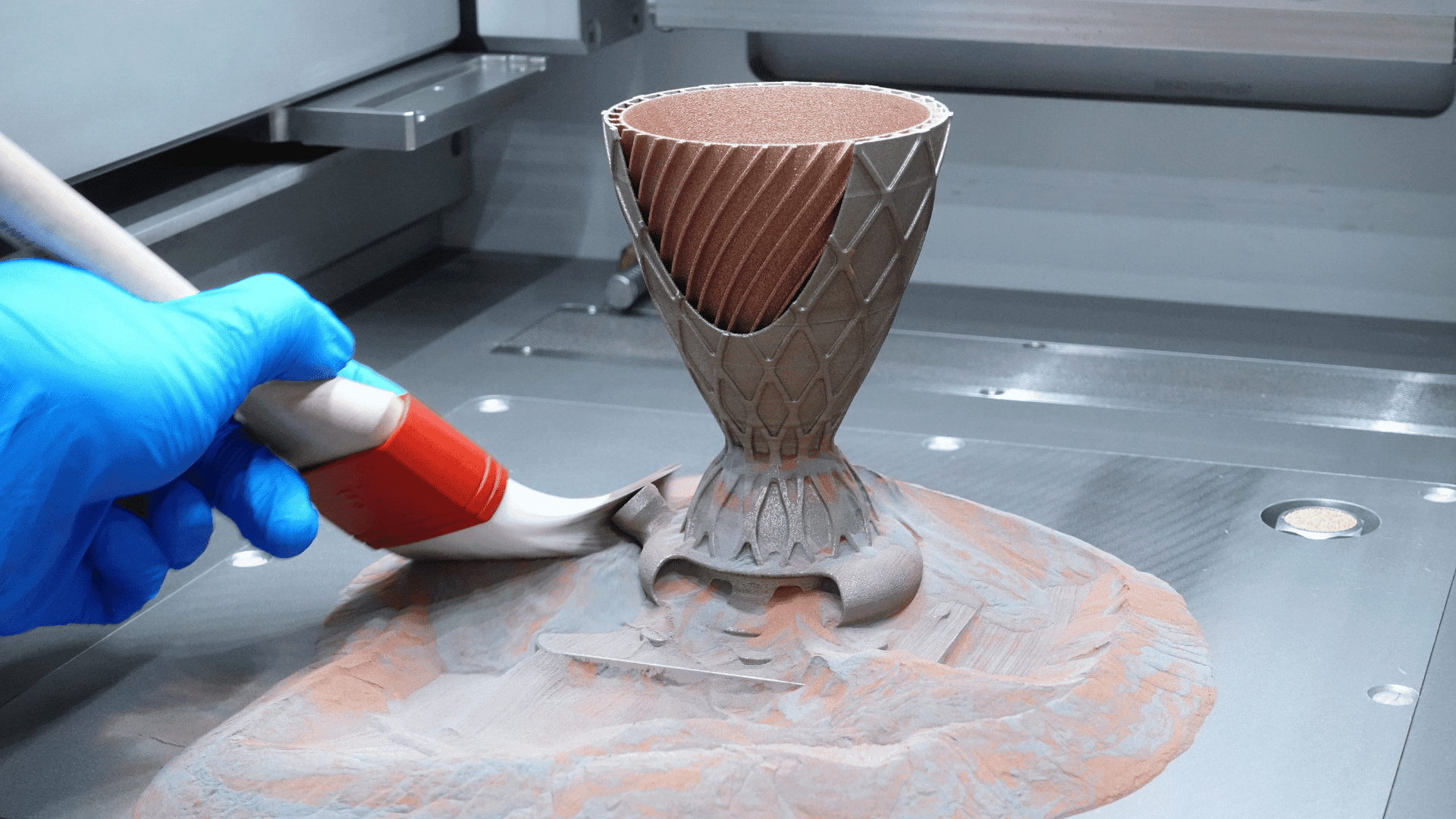
The team has already built a prototype for the Ariane rocket program. It’s a valve made from two different types of steel, one magnetic and one not, which helps keep the rocket stable during flight. Usually, a part like this would need to be milled and welded together, which takes a lot of time. Now, they are comparing their 3D-printed version to the old-school models to see exactly how much time and money they can save.
Advertisement
However, when the team tried to join titanium and nickel, the materials didn’t want to bond properly, creating brittle spots that could break. To fix this, they added a tiny layer of a third metal, molybdenum, to act as a bridge. This kept the parts strong without the materials fighting each other.
Sustainable Space Travel
The researchers are also looking at the waste left behind. 3D printing often leaves over mixed powder that can’t be used again. To solve this, the team created a magnetic system that separates the different metal powders so they can be recycled for the next print. This keeps costs down and is better for the environment, making the technology even more appealing for businesses seeking efficient and sustainable 3d printing service Seattle solutions.
This project is part of a much larger European effort called “Enlighten,” which includes over a dozen partners and about 38 million euros in funding. The goal is to make sure Europe can launch its own rockets without relying so much on outside help.
“We don’t just want to demonstrate how multi-material 3D printing works today – with Enlighten, we are laying the foundation for sustainable, flexible mass production of rockets, which will make Europe more independent in the long term,” Jugert added.
 Read Exclusive Stories
 Bookmark & Save Articles For Later